Military history is filled with serious planning, rigorous doctrine, and methodical development. But it's also filled with experimentation - some brilliant, some desperate, and some so bizarre that they read like rejected movie plots. These aren't urban legends or debunked myths. These are real programs, funded by real governments, pursued by serious people who believed they might actually work.
What makes these experiments fascinating isn't their strangeness - it's understanding why they happened. Wartime urgency creates conditions where almost any idea gets a hearing. The pressure to find an edge, any edge, over adversaries means that even unlikely concepts receive funding and testing. And sometimes, the strange ideas actually work. Dolphins really do detect mines. Dogs really were trained to carry explosives (with tragic results). The line between visionary innovation and absurd failure often only becomes clear in hindsight.
The following ten experiments represent documented programs that actually received government funding and serious testing. Some were abandoned after proving impractical. Others were overtaken by better technology. A few were simply ahead of their time. All of them reveal something important about how military organizations think about innovation, risk, and the boundaries of what's possible.
These aren't presented to mock the decision-makers involved. Innovation requires tolerating failure, and many breakthrough technologies emerged from programs that initially seemed impractical. The same institutional willingness to experiment that produced these unusual programs also produced stealth aircraft, GPS, and the internet. Understanding why organizations pursue strange ideas - and what they learn when those ideas fail - offers insights into how military innovation actually works.
1. Project Pigeon: Training Birds to Guide Missiles
During World War II, famed behaviorist B.F. Skinner proposed using trained pigeons to guide missiles toward enemy ships. The idea sounds absurd, but the science was sound: Skinner had demonstrated that pigeons could be trained to peck consistently at specific visual patterns. His proposal placed pigeons inside the nose cone of a missile, pecking at a screen showing the target. Their pecking would mechanically adjust the missile's guidance fins.
The pigeons performed remarkably well in testing. They maintained focus under simulated combat conditions, weren't distracted by noise or motion, and reliably pecked at target images. The National Defense Research Committee funded the project (later renamed "Project Orcon" for "organic control"), and testing continued through 1944. Skinner demonstrated that three pigeons working together could achieve accuracy comparable to electronic systems of the era.
Despite successful demonstrations, the project was never deployed. Electronic guidance systems were advancing rapidly, and military decision-makers remained skeptical about relying on birds in combat. The program was canceled in 1944, briefly revived in 1948, then permanently ended in 1953. While the pigeons never guided actual weapons, the project contributed valuable research to behavioral psychology and demonstrated that biological systems could perform complex guidance tasks - a concept that would later influence developments in brain-computer interfaces.

2. Project X-Ray: Weaponizing Bats
In 1942, a Pennsylvania dentist named Lytle Adams wrote directly to the White House with an idea: attach tiny incendiary devices to bats and release them over Japanese cities. The bats would naturally roost in wooden buildings, and timed incendiaries would start thousands of simultaneous fires. President Roosevelt personally forwarded the proposal to the military with a note calling Adams "a perfectly sensible fellow."
The military took the idea seriously. The project, codenamed X-Ray, received approval and significant resources. Researchers captured millions of Mexican free-tailed bats and developed miniature incendiary devices weighing less than an ounce. Testing proved the concept worked - perhaps too well. During one test at Carlsbad Army Air Field, armed bats escaped and set fire to a hangar and a general's car. The incident demonstrated both the system's effectiveness and its unpredictability.
Project X-Ray was canceled in 1944, not because it failed, but because the Manhattan Project received priority for resources. Marine Corps assessments concluded the bat bombs could have been more destructive than conventional incendiary raids, with projections suggesting a single B-24 bomber load of bat bombs could start more fires than 400 conventional incendiary bombs. The project remains a fascinating example of how wartime pressures can transform unconventional ideas into funded military programs.
3. Acoustic Kitty: The CIA's Spy Cats
During the Cold War, the CIA invested approximately $20 million in surgically implanting listening devices into cats, hoping to use them as mobile surveillance platforms. The concept, codenamed "Acoustic Kitty," involved placing a microphone in the cat's ear canal, a radio transmitter at the base of its skull, and an antenna woven into its fur. The goal was to deploy these feline spies near Soviet embassies and compounds.
The surgical procedures were complex and the cats required extensive training. After years of development, the program conducted its first field test in Washington, D.C., targeting a conversation at a Soviet compound. According to declassified documents, the cat was released across the street from the target - and was promptly hit by a taxi before reaching its destination.
While this account has become legendary, some former CIA officials dispute the taxi story's accuracy. What's undisputed is that the project was terminated after it became clear that cats simply couldn't be reliably directed to specific locations and made to stay there. A 1967 CIA memo concluded that while the audio equipment worked, "the environmental and security factors" made the approach impractical. The project demonstrated the limits of using animals for directed surveillance - cats, it turned out, do what they want.
4. The "Gay Bomb": Non-Lethal Chemical Weapons Research
In 1994, researchers at Wright Laboratory in Ohio proposed developing a chemical weapon that would cause enemy soldiers to become sexually attracted to each other, disrupting unit cohesion and combat effectiveness. The proposal was part of a broader research effort into non-lethal weapons and was documented in a formal research proposal requesting $7.5 million in funding.
The "halitosis bomb" (causing severe bad breath) and "flatulence bomb" were proposed alongside it, intended to make enemy soldiers identifiable or socially unbearable. These proposals were never funded or developed. The Air Force confirmed the proposals existed but emphasized they were never pursued and represented early-stage brainstorming rather than actual weapons programs.
The documents became public in 2004 through a Freedom of Information Act request and generated significant media coverage. The proposals won the 2007 Ig Nobel Peace Prize, awarded for research that "first makes people laugh, then makes them think." While the specific proposals seem absurd, they emerged from legitimate research into alternatives to lethal weapons - a field that has produced actually-deployed systems like tear gas, pepper spray, and acoustic devices.
5. Project Stargate: Military Psychics
From 1978 to 1995, the U.S. government spent approximately $20 million investigating whether psychic phenomena could provide military intelligence. Project Stargate and its predecessors (Gondola Wish, Grill Flame, Sun Streak) explored "remote viewing" - the claimed ability to perceive distant locations through extrasensory perception. The program employed individuals who claimed psychic abilities and tasked them with describing foreign military installations, hostage locations, and other targets.
The program produced thousands of sessions and reports. Participants sometimes provided descriptions that seemed to match actual targets. However, the information was typically too vague or ambiguous to be operationally useful. When the CIA commissioned an external evaluation in 1995, the American Institutes for Research concluded that while some statistically significant effects appeared in laboratory settings, "the information provided by remote viewing was not helpful in any intelligence operation."
The program was terminated in 1995. Critics noted that confirmation bias and cold reading techniques could explain apparent successes, and that actionable intelligence never actually resulted from the program. Supporters argued the research was scientifically rigorous and produced unexplained results worthy of further study. Regardless of one's view on the underlying phenomena, Stargate represents a documented case of major government investment in paranormal research - driven partly by concerns that the Soviets were pursuing similar programs.

6. Anti-Tank Dogs: The Soviet Experiment That Backfired
During World War II, the Soviet Union trained dogs to carry explosives under enemy tanks. The program, sometimes called "dog mines" or "anti-tank dogs," involved conditioning dogs to seek food underneath tanks, then strapping them with explosives and a triggering mechanism. When the dog crawled under a tank, the explosives would detonate.
The program had a critical flaw: dogs were trained using Soviet tanks, which ran on diesel fuel. German tanks used gasoline. In combat, confused dogs often returned to the familiar smell of Soviet diesel engines rather than attacking German vehicles. Reports indicate that some dogs ran back to Soviet lines, forcing soldiers to shoot them to prevent friendly-fire explosions. The psychological effect on Soviet troops forced to shoot their own animals added another dimension to the program's failure.
Soviet sources claim the dogs destroyed approximately 300 German vehicles, though these numbers are difficult to verify. The program was discontinued by 1942, partly due to the friendly-fire problem and partly because dogs often panicked under combat conditions. The experiment remains controversial and disturbing, representing the desperate measures nations pursue under existential threat - and the unintended consequences that follow when living creatures are weaponized.
7. The Navy Marine Mammal Program: Dolphins That Actually Worked
Unlike many entries on this list, the Navy Marine Mammal Program represents an experimental concept that actually succeeded and remains operational today. Beginning in 1960, the Navy trained dolphins (and later sea lions) for military applications including mine detection, swimmer defense, and object recovery. The program proved that biological sonar and diving capabilities could exceed mechanical alternatives for certain tasks.
Dolphins can detect mines that evade mechanical sensors, particularly those buried in sediment or designed with non-metallic components. During Operation Iraqi Freedom in 2003, Navy dolphins helped clear Umm Qasr port in Iraq. The animals don't disarm mines - they mark locations with acoustic transponders so human divers can investigate safely. Sea lions perform similar roles and have demonstrated the ability to handcuff swimmers using specially designed clamps.
The program demonstrates that not all unusual military experiments fail. When the concept matches the animal's natural capabilities and the operational requirement, biological systems can outperform technological alternatives. The dolphins' sonar evolved over millions of years and remains superior to human-made systems in many respects. The program continues operating from San Diego, with animals deployed to harbors worldwide when mine-clearing or port security missions require their unique capabilities.

8. Project Habakkuk: Aircraft Carriers Made of Ice
During World War II, British inventor Geoffrey Pyke proposed building enormous aircraft carriers from "pykrete" - a mixture of ice and wood pulp that was stronger than pure ice and slower to melt. The vessels, potentially 2,000 feet long, would serve as mid-Atlantic airbases for anti-submarine patrols, solving the "mid-Atlantic gap" where land-based aircraft couldn't provide convoy protection.
Lord Mountbatten famously demonstrated pykrete's properties to Allied leaders by shooting a block with a pistol - the bullet ricocheted off while a pure ice block shattered. Winston Churchill enthusiastically supported the project, codenamed Habakkuk (a biblical reference). A 1,000-ton prototype was built on Patricia Lake in Alberta, Canada, kept frozen by a one-horsepower refrigeration plant.
The project was abandoned in 1943 for practical reasons rather than technical failure. The vessels would have required enormous amounts of wood pulp (essential for other war production), construction would take too long, and improvements in conventional shipbuilding and the development of long-range aircraft made the concept unnecessary. The prototype sank to the bottom of Patricia Lake, where remains can still be visited by divers. Project Habakkuk represents creative problem-solving overtaken by conventional technological progress - a pattern that appears throughout military history.
9. Project Iceworm: Secret Nuclear Base Under the Ice
In the early 1960s, the U.S. Army constructed Camp Century in Greenland - officially a research station, actually a feasibility study for a massive nuclear missile base under the ice cap. The classified Project Iceworm would have placed 600 nuclear missiles in 2,500 miles of tunnels beneath the Greenland ice sheet, constantly moving on railways to prevent Soviet targeting.
Camp Century was an engineering marvel. Powered by a portable nuclear reactor, it housed 200 soldiers in tunnels cut through the ice, complete with a hospital, theater, and chapel. The facility demonstrated that permanent habitation under the ice was technically feasible. What the engineers underestimated was how much the ice sheet moved. Within years, tunnel walls began deforming as the ice flowed, eventually crushing the installation.
The site was abandoned in 1967, with the nuclear reactor removed but considerable waste left behind - including sewage, fuel, and low-level radioactive coolant water. Engineers assumed the waste would remain frozen forever, but climate change has raised concerns that melting ice may eventually release contaminants. Denmark (which administers Greenland) was never informed of the nuclear aspects of the project, creating diplomatic tensions when the classified elements became public decades later. Camp Century demonstrates both impressive engineering ambition and the unforeseen consequences that can follow experimental military programs.
10. The First Earth Battalion: New Age Military Thinking
In 1979, Lieutenant Colonel Jim Channon submitted a report to the U.S. Army proposing a new kind of soldier: one trained in paranormal abilities, non-lethal techniques, and spiritual development. The "First Earth Battalion" would use meditation, psychic powers, and "sparkly eyes" to resolve conflicts without violence. The report reflected the era's interest in New Age philosophy and human potential movements.
While the First Earth Battalion was never officially established, the report influenced actual military programs. Elements of Channon's thinking appeared in the Special Forces, where unconventional approaches to influence and de-escalation found practical applications. More controversially, journalist Jon Ronson's book "The Men Who Stare at Goats" (adapted into a film) documented how some concepts were distorted into programs exploring whether soldiers could kill animals through psychic concentration.
The First Earth Battalion represents the military's periodic interest in human performance optimization, which has taken many forms over the decades - from studying meditation and biofeedback to today's research into cognitive enhancement. While the specific paranormal claims remain unverified, the broader questions about human potential, alternative conflict resolution, and the psychology of soldiers continue to influence military training and doctrine. Sometimes the strangest ideas contain kernels of insight that, properly extracted, contribute to more conventional improvements.
What These Experiments Reveal
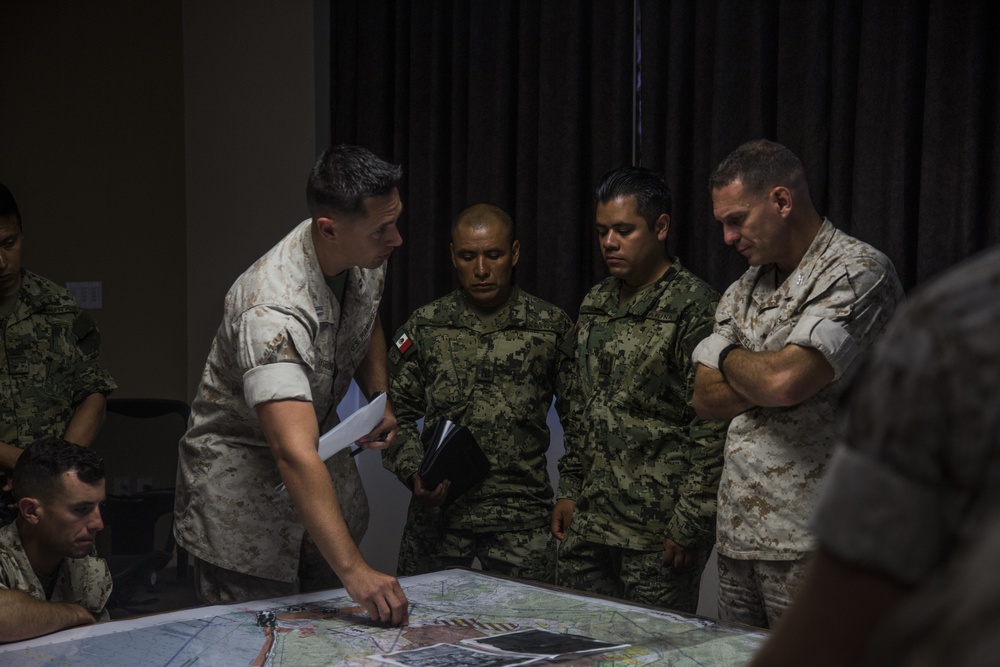
These ten programs share common threads that illuminate how military organizations approach innovation. First, wartime conditions create tolerance for unusual ideas. Projects like the bat bomb and pigeon guidance emerged when stakes were existential and any advantage seemed worth pursuing. Second, biological systems can sometimes outperform technology - the dolphin program's continued success proves that not all animal experiments were misguided.
Third, unconventional programs often fail not because the core concept was wrong, but because practical implementation proved impossible. Acoustic Kitty's audio equipment worked; cats just couldn't be directed. The pykrete aircraft carrier would have floated; it just wasn't worth the resources. Fourth, even failed experiments contribute knowledge. Project Pigeon advanced behavioral psychology. Camp Century revealed ice sheet dynamics that inform climate science today.
Finally, the willingness to experiment - including tolerance for spectacular failures - characterizes organizations capable of breakthrough innovation. The same military that funded psychic research also funded stealth technology, GPS, and the ARPANET that became the internet. Filtering good ideas from bad ones can only happen after exploring both. As military exercises and experimentation continue to shape doctrine, the tradition of pursuing improbable ideas persists - though today's experiments tend toward drones and artificial intelligence rather than pigeons and bats.
Frequently Asked Questions
Yes. Project Pigeon (later Project Orcon) was a real program developed by B.F. Skinner during World War II. Pigeons were trained to peck at images of targets, with the idea that their pecking would mechanically guide a missile. The pigeons performed reliably in testing, but the project was never deployed operationally because electronic guidance systems became more practical.
Did the U.S. military really try to train pigeons to guide missiles?
Yes. Project Pigeon (later Project Orcon) was a real program developed by B.F. Skinner during World War II. Pigeons were trained to peck at images of targets, with the idea that their pecking would mechanically guide a missile. The pigeons performed reliably in testing, but the project was never deployed operationally because electronic guidance systems became more practical.
What was the bat bomb project?
Project X-Ray was a World War II program that planned to use bats carrying small incendiary devices to start fires in Japanese cities. The idea was that bats would roost in wooden structures and the timed incendiaries would ignite fires. The project was approved by FDR and tested successfully, but was canceled in 1944 when resources shifted to the Manhattan Project.
Did the CIA really try to use cats for surveillance?
Yes. Operation Acoustic Kitty was a CIA project in the 1960s that surgically implanted listening devices in cats, hoping to use them to eavesdrop on Soviet officials. After spending approximately $20 million and years of development, the project was abandoned when it proved impossible to reliably direct cats where they needed to go.
What was the Stargate Project?
The Stargate Project was a $20 million U.S. government program that ran from 1978 to 1995, investigating the potential military applications of psychic phenomena, particularly "remote viewing." While some participants claimed successes, independent evaluation concluded the intelligence gathered was too vague to be operationally useful, and the program was terminated.
Why do militaries pursue such unusual experimental programs?
Military organizations pursue unconventional experiments because warfare rewards innovation and surprise. During wartime especially, any potential advantage - however unlikely - may be worth investigating. Many strange experiments occurred during WWII when urgency and existential stakes encouraged creative thinking. Some seemingly absurd ideas, like using dolphins for mine detection, actually proved successful and remain in use today.