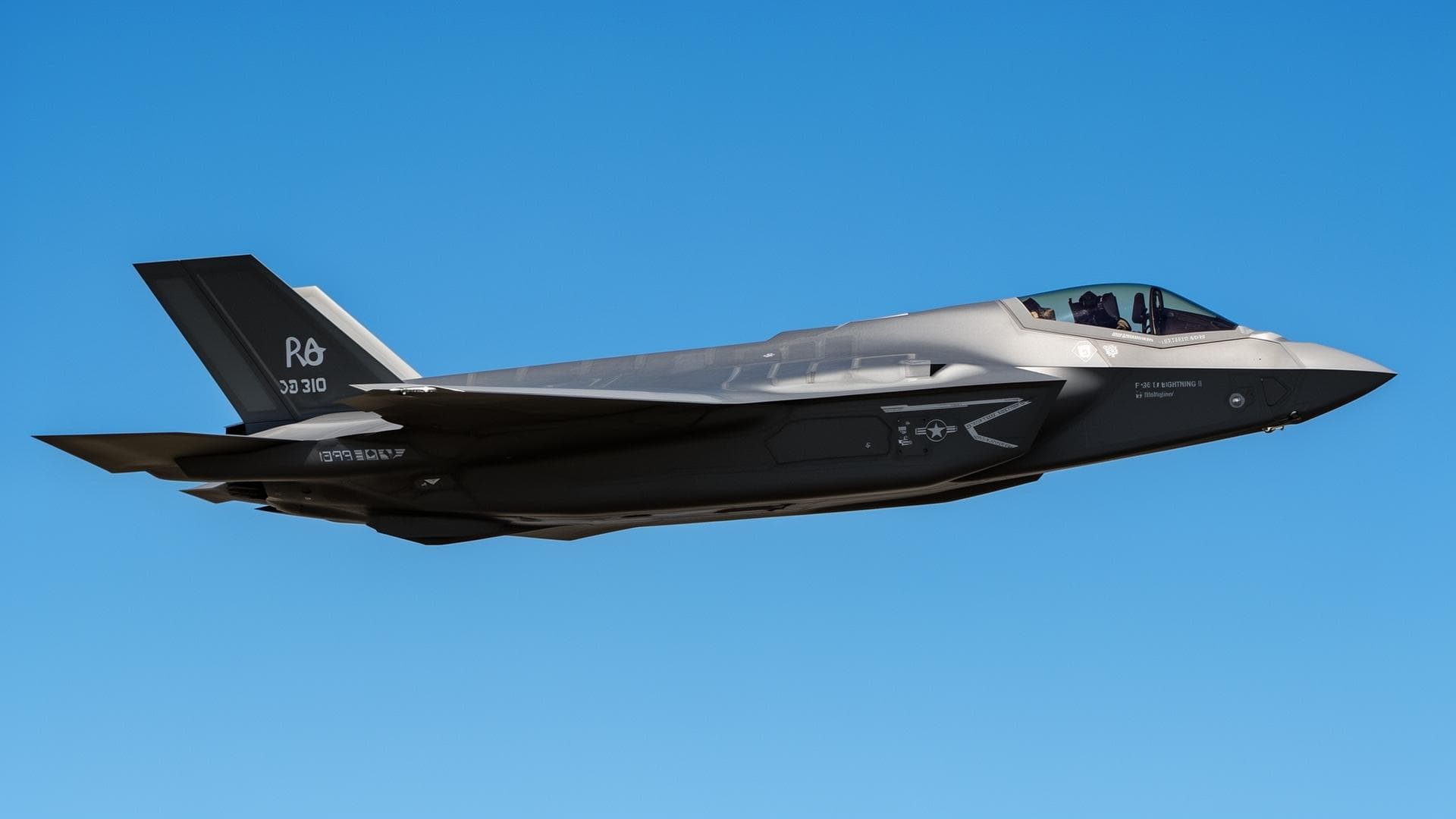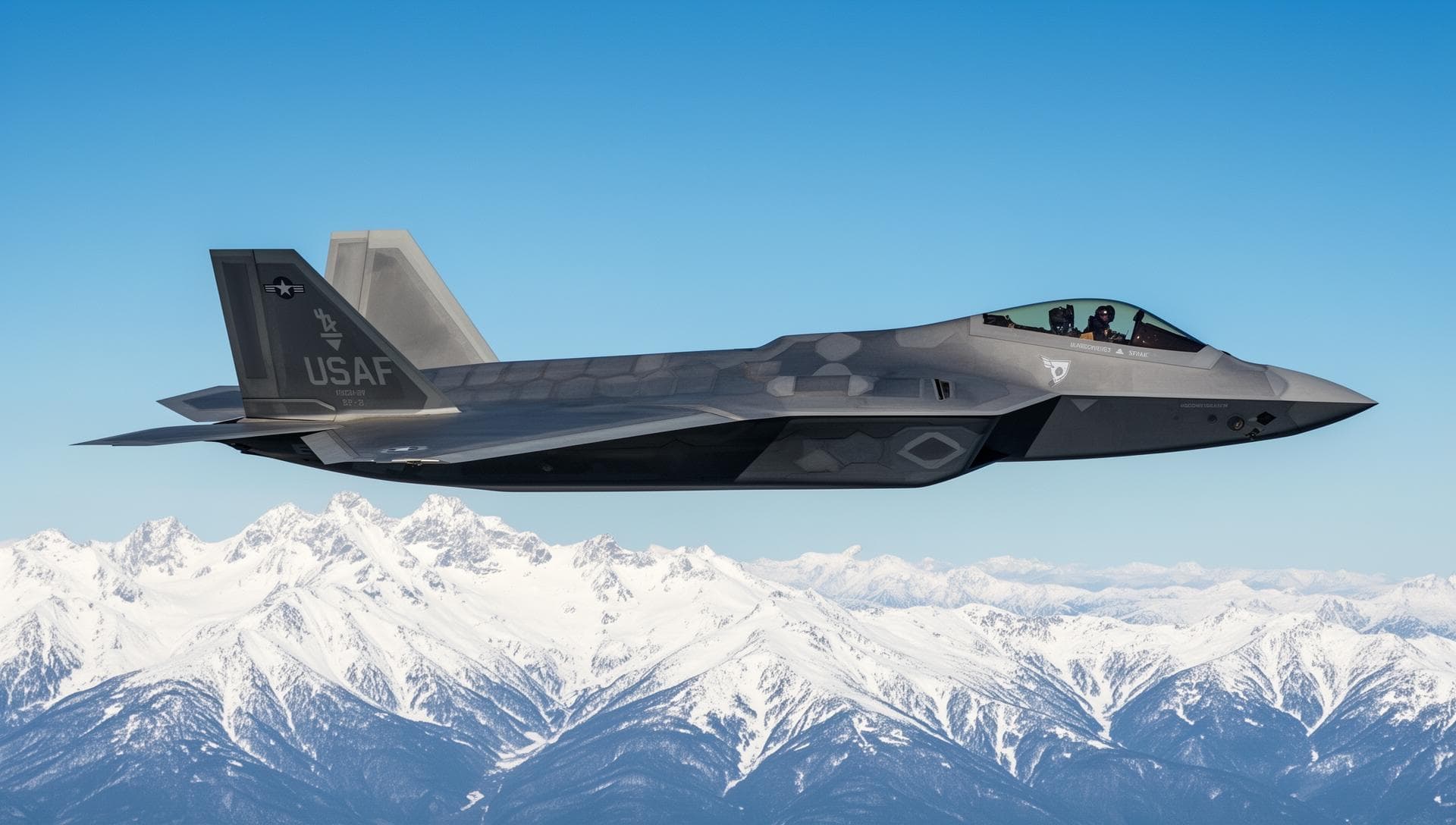
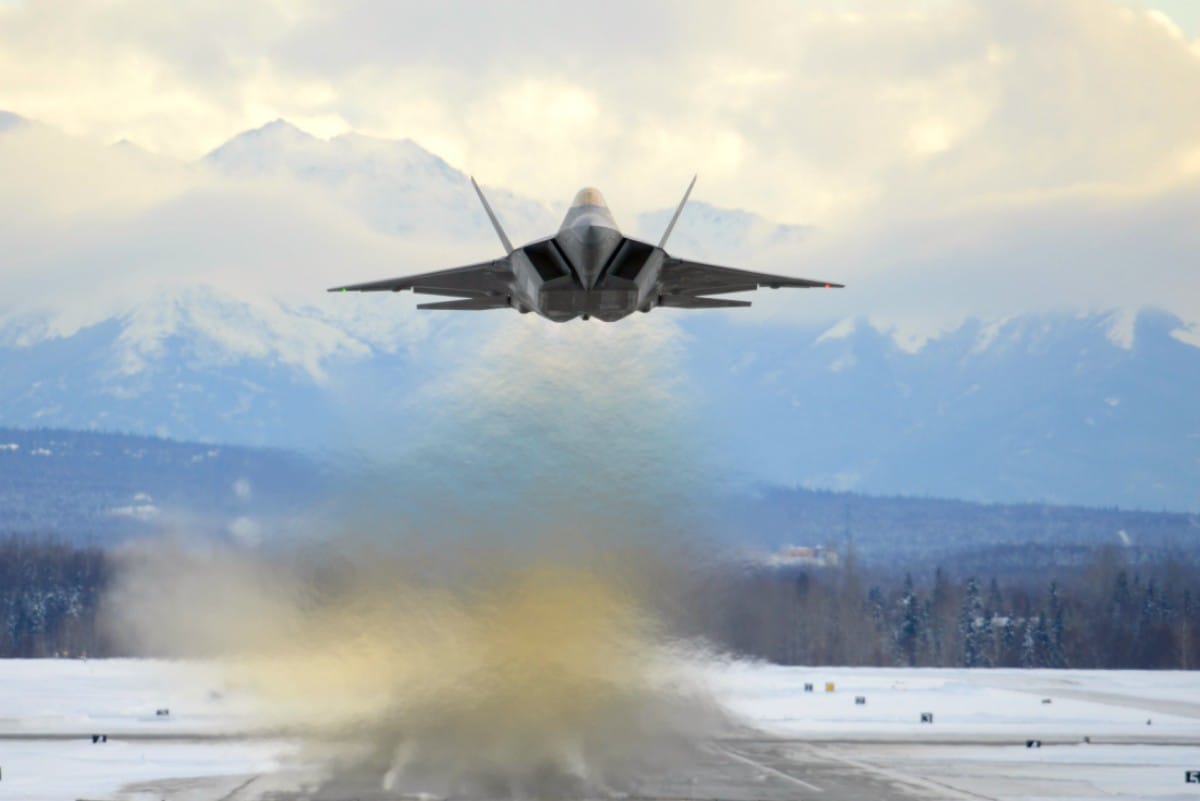
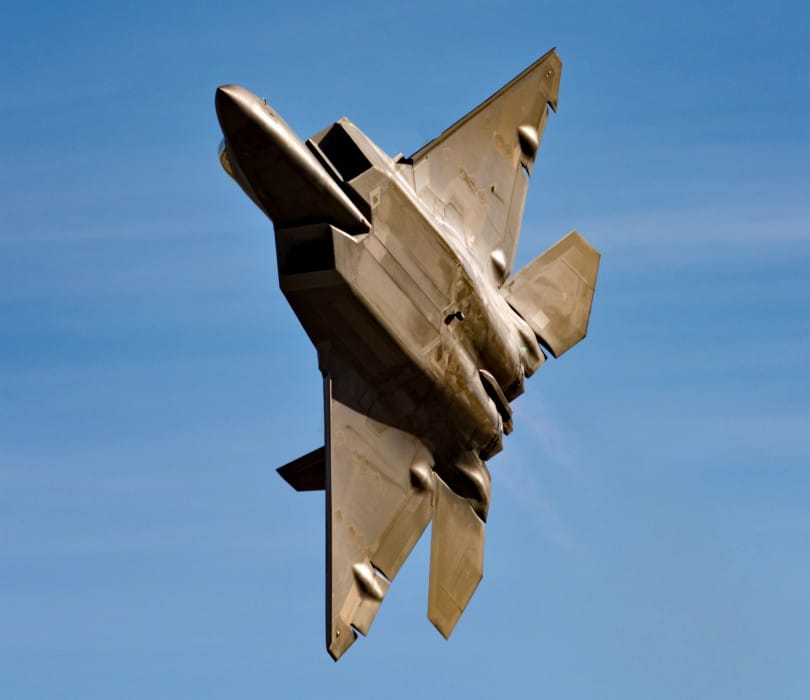
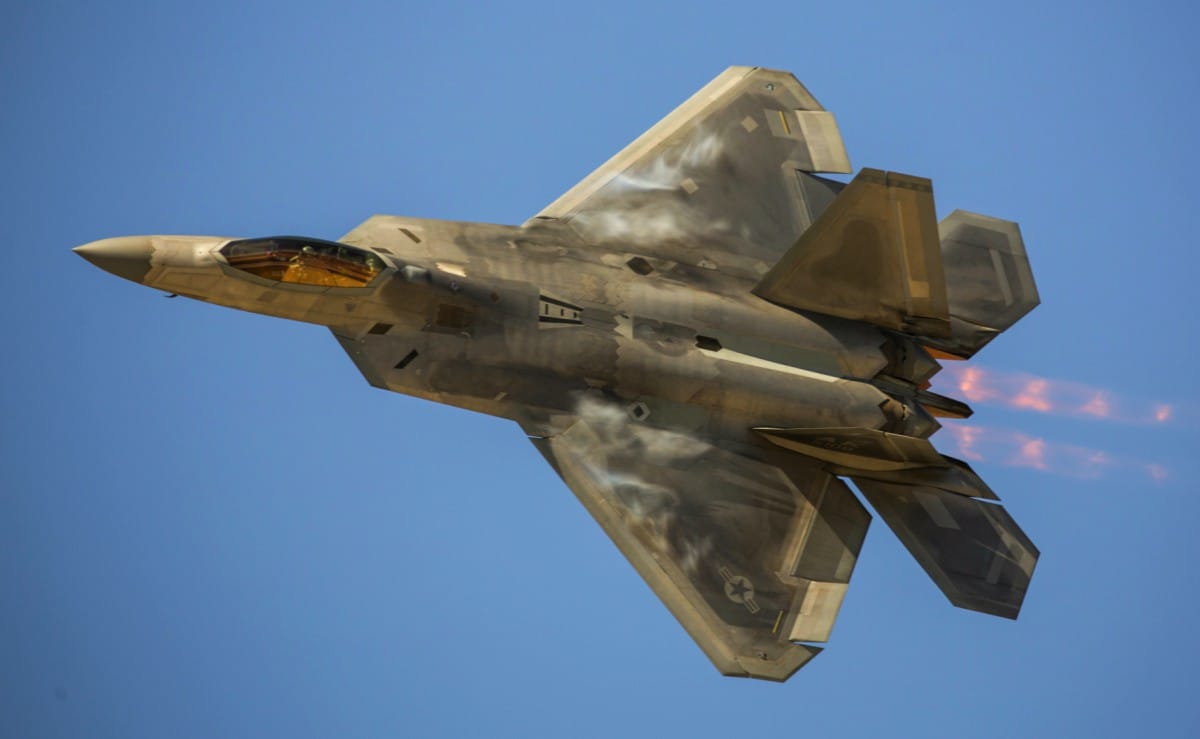
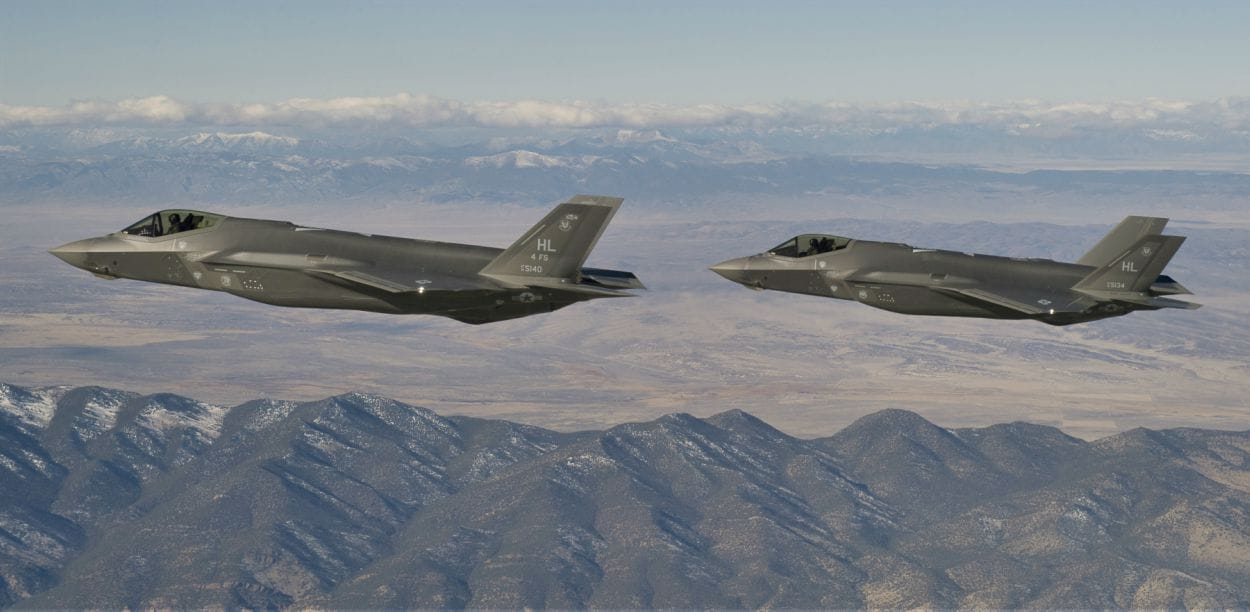
The F-22 vs F-35. On one hand, you have the world's premier aircraft in air dominance. On the other hand, you have the most expensive weapons procurement program in world history. Even though they're alike in so many ways, make no mistake: the F-22 Raptor and F-35 Lightning II are two totally different birds.
This comparison often gets framed as a competition, but that framing misses the point. These aircraft were designed to solve different problems, built in different eras, and optimized for fundamentally different concepts of how air power should be employed. The F-22 emerged from Cold War requirements to dominate Soviet fighters. The F-35 was conceived after the Cold War ended, when the challenge shifted from air-to-air supremacy to penetrating integrated air defenses and prosecuting strikes across the full spectrum of conflict.
Understanding why both aircraft exist, and why the U.S. military operates them simultaneously, requires moving beyond simple specification comparisons. This article provides a comprehensive analysis of both platforms, examining not just what they can do, but why they were designed that way and what those choices mean for real-world combat effectiveness.

F-22 vs F-35 Cost: Understanding the Numbers
Cost comparisons between these aircraft are often misleading because they conflate different types of costs and ignore the strategic context behind procurement decisions.
The F-22 is expensive. The U.S. Air Force had to stop production early on the F-22 because of soaring project costs. The cost of one aircraft alone is an estimated $334 million which includes research and development (unit cost of $150 million). The Air Force wanted 700 F-22s to be produced but had to cancel production just shy of 200 because they were already over-budget. The flight cost per hour for an F-22 is roughly $60,000.
With a price tag that high and no immediate threat in the open skies that require the most dominant fighter jet in the world, the U.S. Military needed to come up with a more viable, less expensive long-term solution.
The Pentagon is currently under contract to buy 90 new F-35s for $8.2 billion from Lockheed Martin. Over 2,400 F-35s are expected to be produced for each the Navy, Air Force and Marines once the program is all said and done. One aircraft costs an estimated $91 million. The flight cost per hour is roughly $67,000.
Why Cost Comparisons Are Often Misleading
Comparing the F-22's $334 million unit cost to the F-35's $91 million creates a misleading impression. The F-22's high per-unit cost reflects its small production run of fewer than 200 aircraft. Development costs, which would have been spread across 700 aircraft under original plans, were instead distributed across a fraction of that number.
Had the F-22 been produced at F-35 quantities, its unit cost would have been dramatically lower. Conversely, if only 195 F-35s had been produced, its unit cost would have been far higher than the F-22's. Scale matters.
What about production of the F-22 vs F-35? With the F-35's superior ability to engage targets on-land combined with its much cheaper manufacturing costs, the U.S. Military will be producing the F-35 Lightning II until 2037. The last F-22 produced was delivered in 2012.
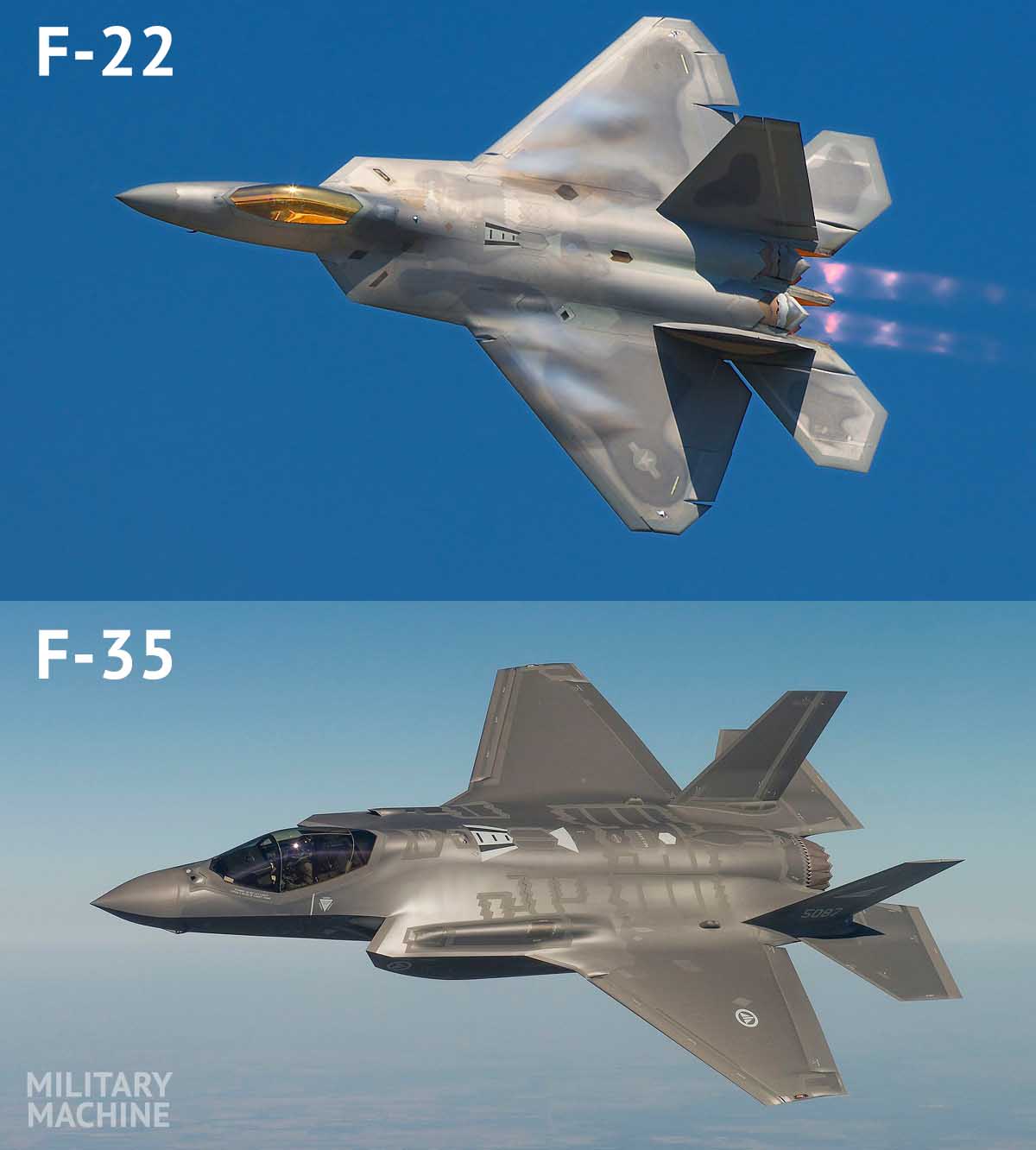
Different Wars, Different Designs
The F-22 program began in 1981, when the Cold War was intensifying and the Soviet Union was fielding increasingly capable fighters like the MiG-29 and Su-27. American planners were haunted by the possibility that future Soviet designs might challenge American air superiority. The solution was to build an aircraft so dominant that no adversary could contest the skies.
Every aspect of the F-22's design serves this purpose. Twin Pratt & Whitney F119 engines produce more thrust than any other fighter powerplant, enabling sustained supersonic flight without afterburner. The airframe combines stealth shaping with exceptional aerodynamics, making the Raptor both invisible to radar and supremely maneuverable in a dogfight. Thrust vectoring nozzles allow the aircraft to perform maneuvers impossible for conventional fighters.
The F-35 emerged in the 1990s with different assumptions. The Cold War was over. America faced not peer competitors but regional adversaries with sophisticated but incomplete air defenses. The military needed an affordable stealth aircraft that could replace multiple aging platforms while performing a wide range of missions. Air-to-air combat was one capability among many, not the defining requirement.
The F-22 asks: "How do we dominate any aircraft in the sky?"
The F-35 asks: "How do we see everything, strike anywhere, and share information with everyone?"
Avionics and Sensor Integration
Let's look at the avionics of the F-22 vs F-35. The Raptor is outfitted with a specially-designed AN/APG-77 radar from Northrop Grumman. It gives the F-22 a nearly impossible advantage: it can locate and engage the enemy without that aircraft ever even seeing the F-22 on its radar. The AN/APG-77 uses an active and electronically scanned antenna array of 2,000 transmitter/receiver modules. It can also communicate data information over a secure link and jam enemy electronics systems.
The F-22 also contains countermeasures. If a heat-seeking missile locks on to an F-22 Raptor, it releases flares to misdirect the heat-seekers. If a radar-guided missile locks on to an F-22 Raptor, it releases chaff (small pieces of reflective material) to scatter the radar waves.
The F-35 Lightning is outfitted with Northrop Grumman's latest avionics system, the AN/APG-81. The 81 model contains all the same air-to-air modes as the earlier radar generations but also includes: high-resolution mapping of the ground, Advanced Electro-Optical Targeting System (EOTS), and a custom designed AN/ASQ-239 Barracuda electronic warfare system. These systems, along with others, provide the F-35 Lightning with never-before-seen 360 degrees situational awareness. The F-35 also contains multispectral imaging countermeasures.
Sensor Fusion: The F-35's Defining Capability
If there is one area where the F-35 genuinely surpasses the F-22, it is sensor fusion. The F-35 was designed in an era when processing power allowed the fusion of multiple sensor inputs into a single coherent picture. The F-22, designed earlier, has capable sensors but less sophisticated fusion.
What does sensor fusion actually mean? In a traditional cockpit, the pilot has multiple displays showing different sensors. The radar shows one picture. The electronic warfare system shows another. The infrared sensor shows a third. The pilot must mentally combine these inputs, interpreting conflicting or incomplete information while also flying the aircraft and making tactical decisions.
The F-35's sensor fusion automates this process. The aircraft's computers correlate inputs from the APG-81 radar, the AAQ-37 Distributed Aperture System, the AAQ-40 Electro-Optical Targeting System, and the ASQ-239 electronic warfare suite. When the radar detects a target, the infrared sensors slew to confirm. When electronic emissions reveal an enemy aircraft, the system triangulates its position. All of this happens automatically, presenting the pilot with a unified tactical picture rather than raw sensor data.
The helmet-mounted display takes this further. Unlike traditional head-up displays that project information onto a fixed glass panel, the F-35's helmet projects information directly onto the pilot's visor regardless of where they look. Combined with cameras embedded in the aircraft's skin, pilots can effectively see through the aircraft itself, looking down through the floor to track targets below.
Speed and Size
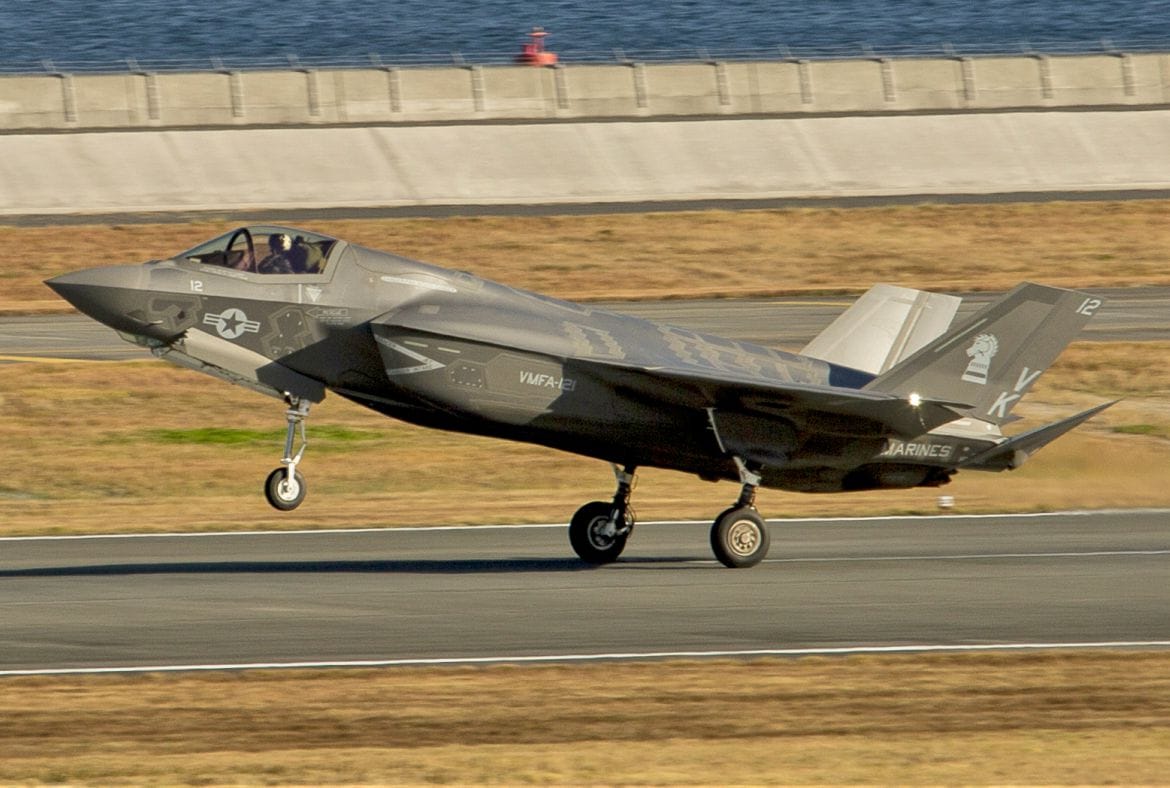
When it comes to sheer speed, the F-35 just cannot keep up. But it was not built to. The F-35, with its air-to-ground combat design, is not designed for breakaway speed. It has a top speed of 1.60 Mach, and less maneuverability than the F-22 in dogfight scenarios. The F-22 can ramp it up all the way to 2.25 Mach. It climbs at a rate of 62,000 feet per minute whereas the F-35 climbs at 45,000 feet per minute.
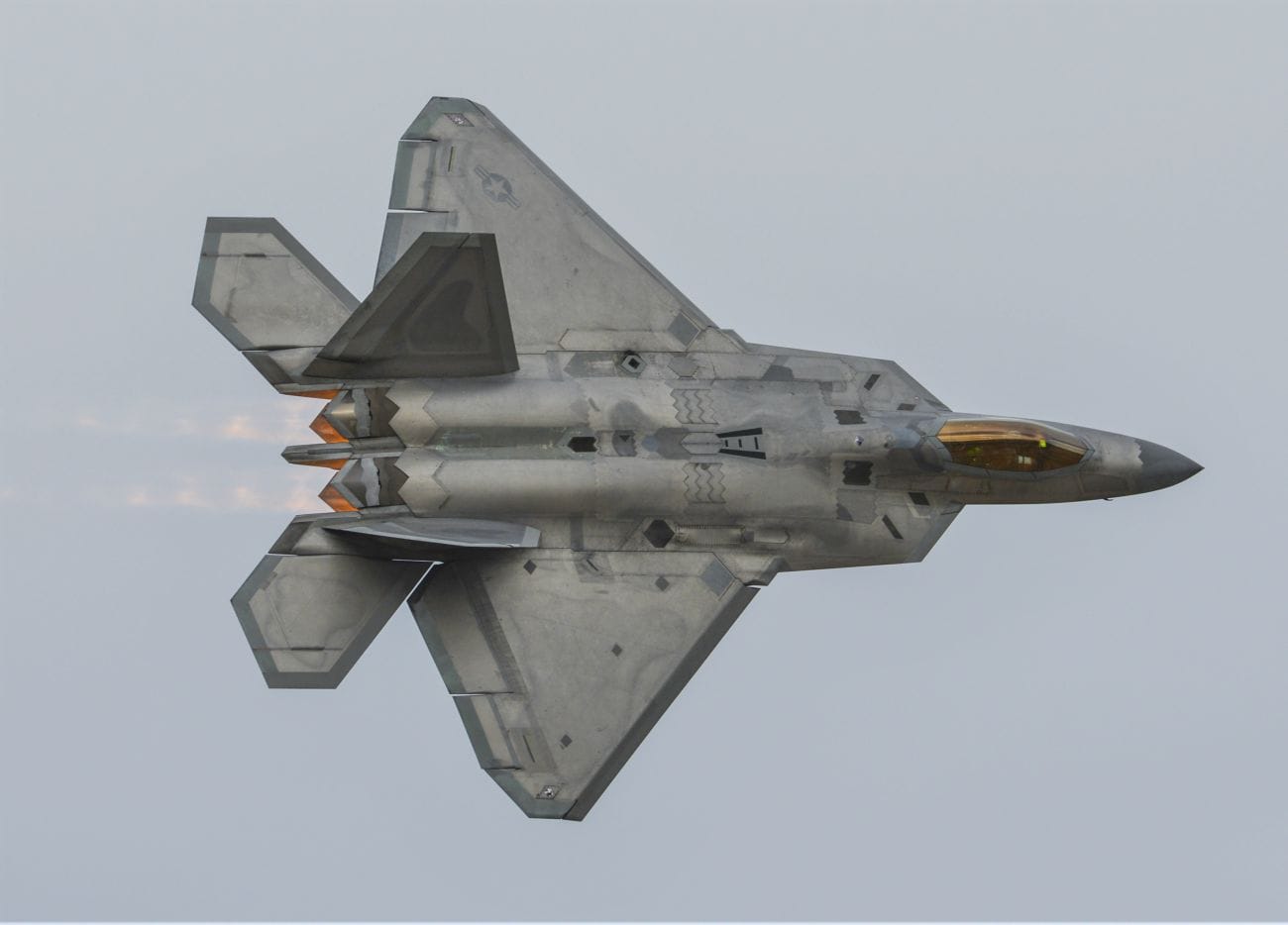
In every aspect of size: height, weight, wingspan, wing area, weight: the F-22 Raptor is bigger than the F-35 Lightning. See the specs below for details.
Why Speed Matters Less Than It Used To
Speed was essential in an era when fighters needed to intercept bombers or chase down enemy aircraft. Today's threat environment is different. Modern beyond-visual-range missiles have far greater speed and range than aircraft. A fighter traveling at Mach 2 is still dramatically slower than a missile traveling at Mach 4 or higher.
What matters more is detecting the threat before it detects you, launching first, and having missiles that can reach the target before the enemy can respond. Speed helps with repositioning and escape, but it is no longer the decisive factor it once was.
Similarly, close-range maneuverability matters less when most engagements happen at ranges measured in tens of miles. The F-22's thrust vectoring allows it to perform extraordinary maneuvers at slow speeds. But modern doctrine emphasizes avoiding these scenarios entirely. The best outcome is never entering a dogfight because you killed the enemy before he knew you were there.
Weapons Bays
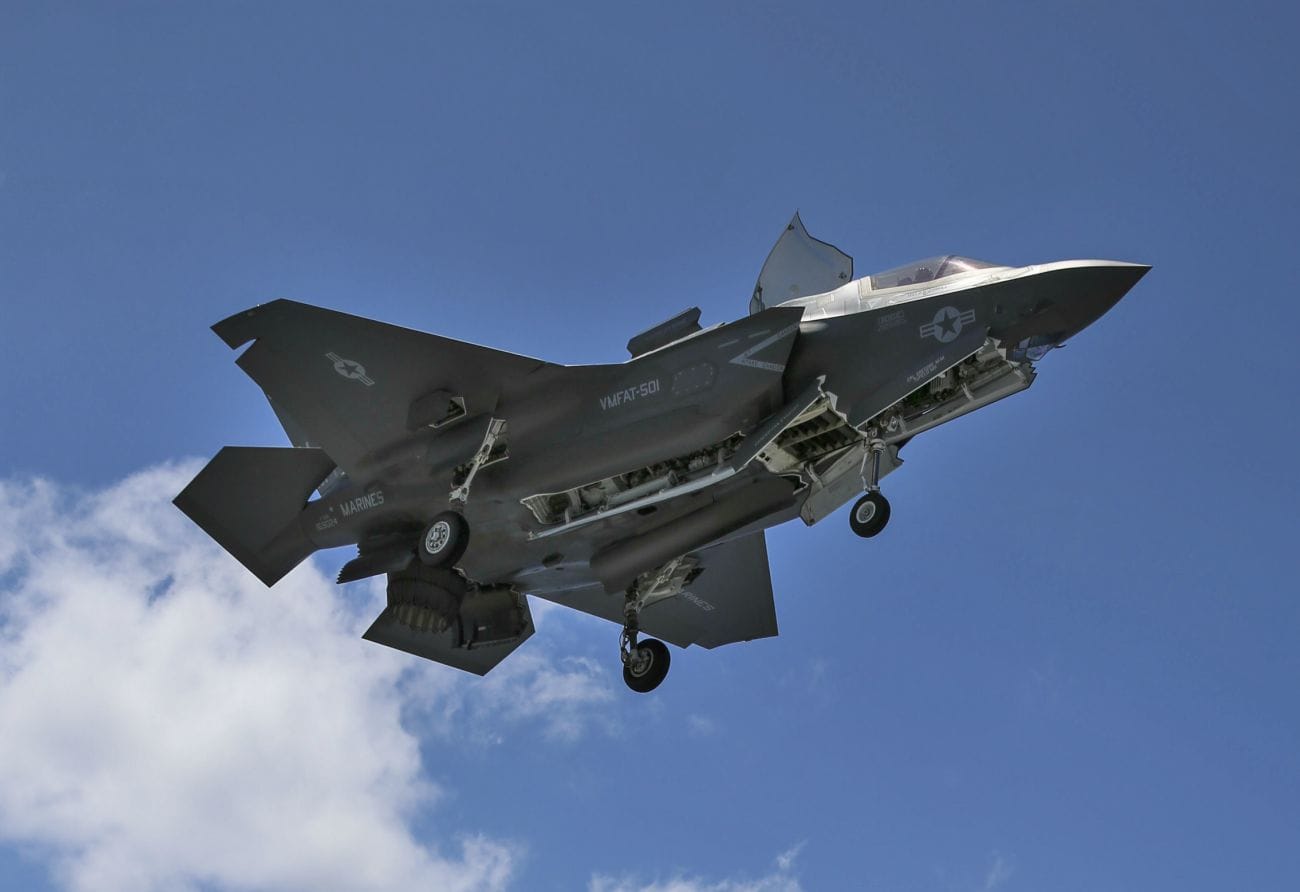
The biggest physical difference in the capabilities between the F-22 vs F-35 are their weapon bays.
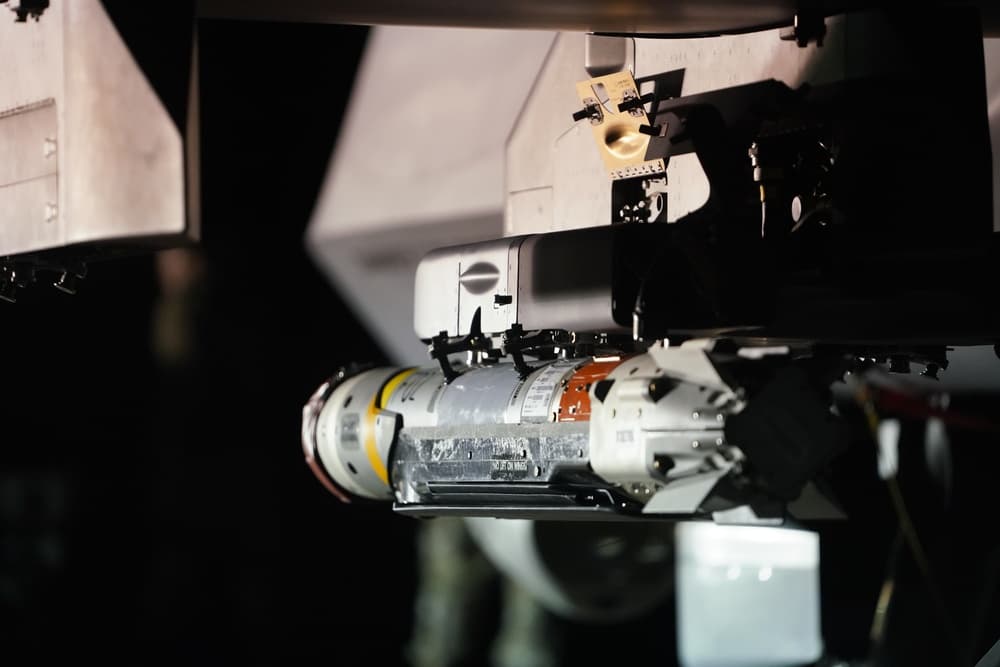
Designed for air-to-air combat, the F-22 has a weapons bay designed accordingly. The main bay, located on the bottom of the fuselage, can hold six LAU-142/A launchers for missiles designed for enemies that are out of visual range. Each side weapons bay, on the left and right of the fuselage, holds an LAU-141/A launcher for shorter-range missiles.
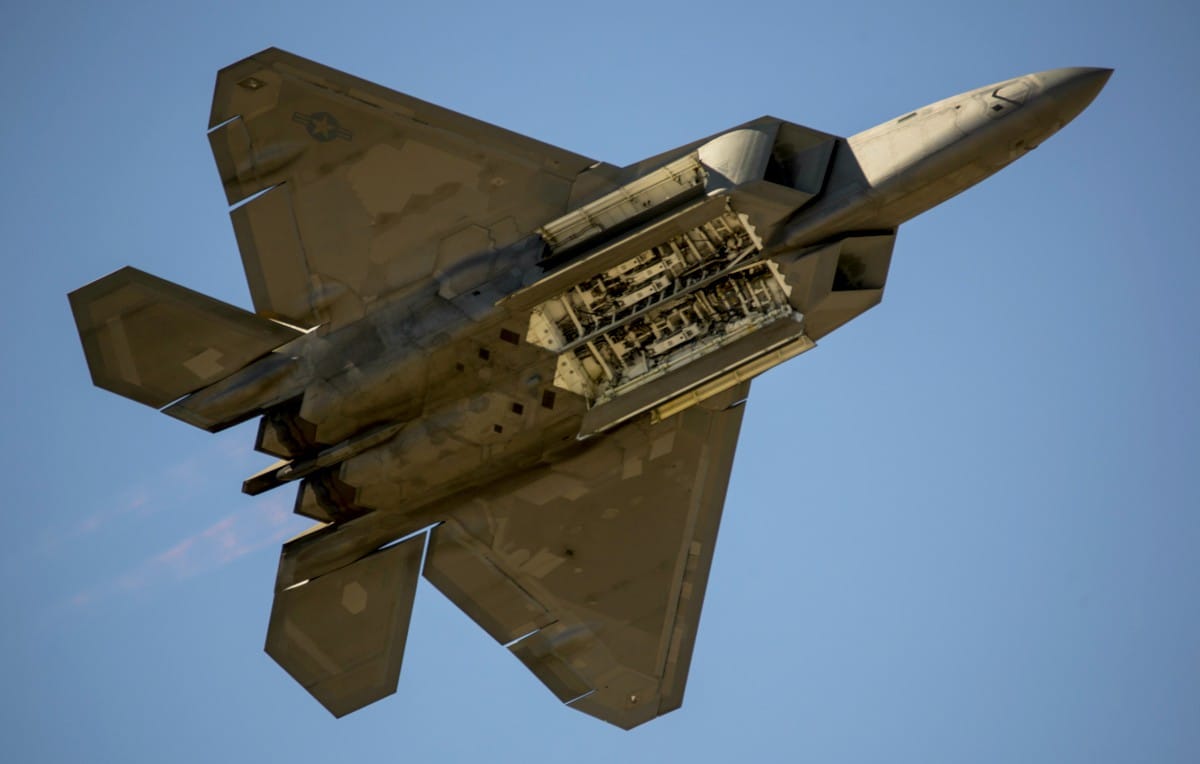
The F-35, designed for a more versatile engagement approach, also has a unique weapons bay. The bay on the F-35 is deeper and narrower than the F-22, in order to carry heavier bombs meant for air-to-ground combat. The F-35 can carry any of the following air-to-ground bombs: AIM-120 AMRAAM, AIM-132 ASRAAM, Brimstone anti-tank missiles, cluster munitions, Joint Direct Attack Munition and Paveway series of bombs. Some of these weigh up to 2,000 pounds. The heaviest bomb an F-22 can handle is 1,000 pounds.
Stealth: Optimized for Different Threats
Both aircraft are stealthy, but their stealth was designed against different threats. The F-22's stealth was optimized for air-to-air combat, reducing its radar signature from angles where enemy fighter radars would be looking. It needed to approach, engage, and destroy enemy aircraft without being detected long enough for adversaries to launch their own missiles.
The F-35's stealth was optimized for survivability against ground-based integrated air defense systems. These systems use multiple radars at different frequencies, networked together and coordinated by command centers. The F-35 needed to penetrate these networks, deliver weapons, and return safely. Its stealth shaping prioritizes the frontal aspect since aircraft typically fly toward their targets during the attack phase.
Neither aircraft is invisible. Stealth does not mean undetectable. What it means is reduced detection range. An aircraft that might be detected at 200 miles with a conventional radar signature might not be detected until 20 miles with a stealth signature. This matters enormously. It determines who sees whom first, who can shoot first, and who can maneuver without being tracked.
Stealth Maintenance Reality
Both aircraft require significant maintenance to preserve their radar-absorbing coatings and materials. Early stealth aircraft like the F-117 and B-2 had notoriously demanding maintenance requirements, with specialized hangars and lengthy procedures between missions.
The F-22 improved on earlier designs but still requires careful handling. Its stealth coatings must be inspected and repaired regularly. The Air Force has made progress reducing maintenance burdens, but the F-22 remains more maintenance-intensive than legacy fighters.
The F-35 was designed with maintainability in mind from the beginning. Its stealth features use more durable materials and require less specialized care. This contributes to lower operating costs per flight hour compared to the F-22, though both remain more expensive to operate than fourth-generation aircraft.
Networked Warfare and Information Sharing
The F-35 was designed to be a node in a networked force. It does not fight alone. It shares information with other F-35s, with legacy aircraft, with ground stations, with ships, and with any other platform connected to the tactical network.
The Multifunction Advanced Data Link, or MADL, allows F-35s to share high-bandwidth data securely and stealthily. Unlike traditional datalinks that broadcast in ways detectable by adversaries, MADL uses directional transmissions that are harder to intercept or jam.
This networking capability means an F-35 that detects a target can share that information instantly with other aircraft. A flight of four F-35s effectively operates as a single distributed sensor platform, with each aircraft's view combined into a shared picture. If one aircraft has a better angle for a shot, it can take it based on targeting data from another aircraft's sensors.
The F-22 has datalink capabilities, including Link 16, but its networking was designed in an earlier era. Integration with other platforms has improved over the years through upgrades, but the F-22 was fundamentally conceived as a more independent platform.
Working Together: The Complementary Force
The most capable air operations combine both aircraft. F-22s provide air superiority, sweeping the skies of enemy fighters and creating conditions where other aircraft can operate safely. F-35s penetrate air defenses, strike targets, and gather intelligence that informs the entire force.
In this model, the F-22 is the quarterback and the F-35 is the wide receiver with exceptional situational awareness. The Raptor ensures no enemy fighters interfere while the Lightning conducts its mission. Information flows in both directions, with each platform contributing its unique strengths.
Correcting Common Misunderstandings
The Dogfight Argument
Internet debates often focus on which aircraft would win in a dogfight. This framing fundamentally misunderstands modern air combat. The goal is to never be in a dogfight. The pilot who enters a turning fight has already made multiple tactical errors.
Modern air combat doctrine emphasizes detecting targets at maximum range, engaging with beyond-visual-range missiles, and leaving before the enemy can respond. Situational awareness, sensor capability, and missile performance matter far more than turning radius.
If a dogfight does occur, the F-22 would have significant advantages. But evaluating aircraft based on this scenario is like evaluating tanks based on their performance in jousting.
The Numbers Game
Some argue that the F-35's larger numbers make it strategically more valuable than the rare F-22. Others argue that quality beats quantity. Both arguments miss the point.
Air forces need both. They need aircraft capable of dominating the most demanding air-to-air scenarios, and they need affordable multi-role platforms that can be deployed at scale. The F-22 and F-35 together provide what neither could alone.
Combat Experience
The F-22 first saw combat in September 2014, conducting strikes against ISIS positions in Syria. These operations demonstrated the aircraft's ability to penetrate air defenses and deliver precision weapons. However, the Raptor has never engaged enemy aircraft in air-to-air combat. No adversary has been foolish enough to challenge it.
The F-35 has accumulated more varied combat experience. The Israeli Air Force has employed F-35I Adir aircraft in combat operations throughout the Middle East, reportedly striking targets in Syria, Iraq, and elsewhere. The U.S. Marine Corps deployed F-35Bs operationally, and U.S. Air Force F-35As have participated in various operations.
Neither aircraft has been shot down in combat. Neither has engaged enemy fighters. This reflects both their effectiveness and the nature of recent conflicts, which have not involved peer adversaries with comparable air forces.
Comparison
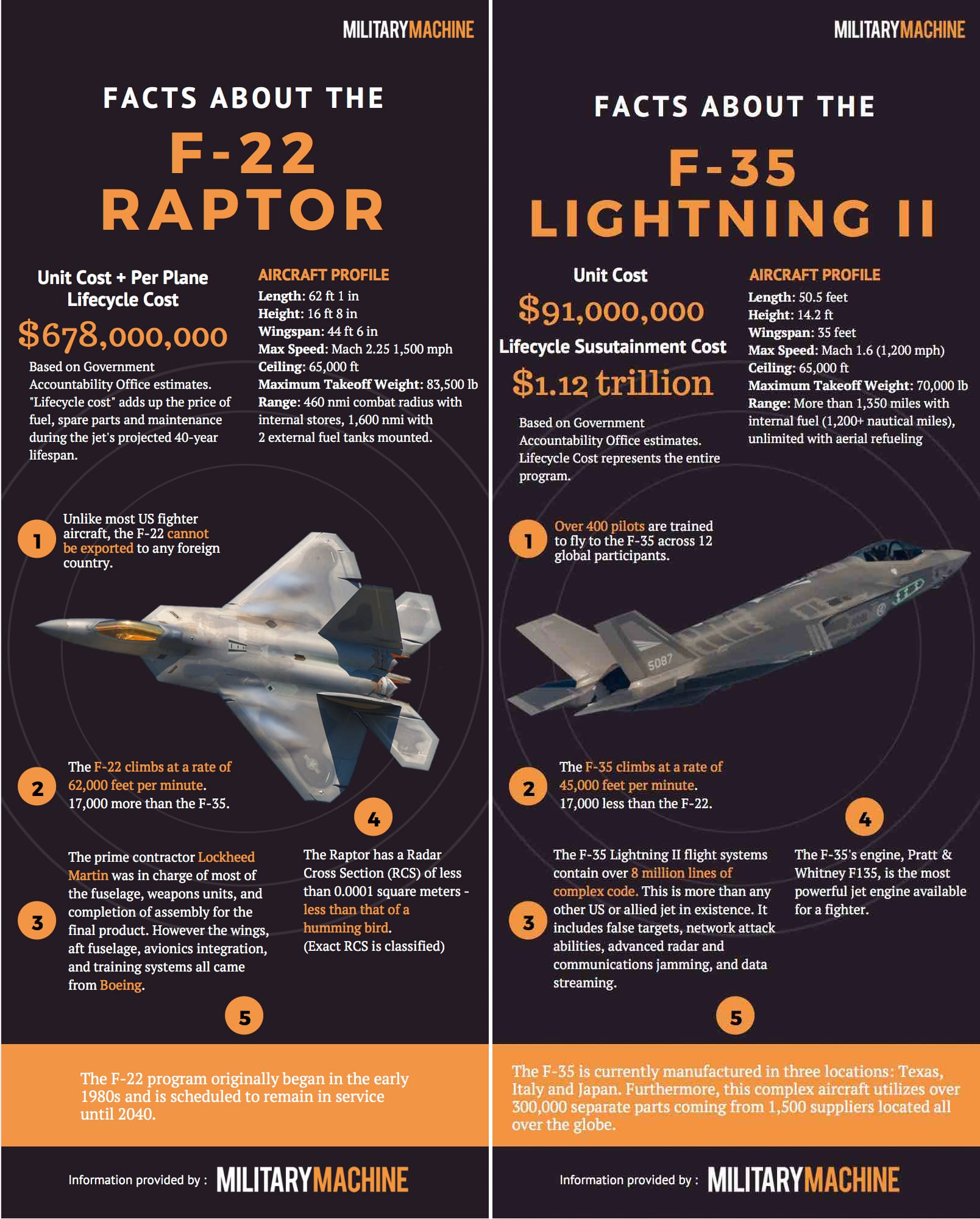
See F-22 vs F-35 Specifications
| F-22 Raptor | F-35 Lightning II | |
|---|---|---|
| Primary Function | Air dominance, multi-role fighter | Multi-role fighter |
| Contractor | Lockheed Martin, Boeing | Lockheed Martin |
| Power | Two Pratt & Whitney F119-PW-100 turbofan engines with afterburners and two-dimensional thrust vectoring nozzles | One Pratt & Whitney F135-PW-100 turbofan engine |
| Thrust | 35,000-pound class (each engine) | 43,000-pounds |
| Wingspan | 44 feet, 6 inches (13.6 meters) | 35 feet (10.7 meters) |
| Length | 62 feet, 1 inch (18.9 meters) | 51 feet (15.7 meters) |
| Height | 16 feet, 8 inches (5.1 meters) | 14 feet (4.38 meters) |
| Maximum Takeoff Weight | 83,500 pounds | 70,000 pound class |
| Fuel Capacity | 18,000 pounds | 18,498 pounds |
| Speed | Mach 2+ with supercruise capability | Mach 1.6 |
| Range | More than 1,850 miles ferry range with two external wing fuel tanks (1,600 nautical miles) | More than 1,350 miles with internal fuel (1,200+ nautical miles), unlimited with aerial refueling |
| Ceiling | Above 50,000 feet (15 kilometers) | Above 50,000 feet (15 kilometers) |
| Crew | One | One |
| Unit Cost | $334 million (with R+D), $150 million unit cost | $91 million |
Looking Ahead
The F-22 will eventually be replaced. The Air Force is developing the Next Generation Air Dominance, or NGAD, program to succeed the Raptor. Details remain classified, but the program is expected to produce an aircraft optimized for the 2030s threat environment.
The F-35 will continue in production for decades and remain in service through the 2070s. Continuous upgrades through the Block 4 program and beyond will add new capabilities, weapons, and sensors. The aircraft today is significantly more capable than early production models, and this evolution will continue.
Both programs face challenges. The F-22 fleet is aging and expensive to maintain. The small number of aircraft limits how much can be demanded of them. The F-35 continues to work through software challenges and supply chain issues, though availability rates have improved significantly.
The Real Lesson
The F-22 and F-35 were not designed to compete with each other. They were designed to complement each other within a broader force structure. The Raptor ensures no enemy aircraft can contest the skies. The Lightning provides the multi-role flexibility and networked capabilities that modern operations demand.
Asking which is "better" misses the point. The correct question is what mission needs to be accomplished, and which aircraft is better suited to accomplish it. For air dominance, the F-22 remains unmatched. For strike, suppression, intelligence, and networked operations, the F-35 offers capabilities the F-22 cannot.
Together, they represent the most capable tactical aviation force in history.
Frequently Asked Questions
Neither is universally 'better' - they were designed for different missions. The F-22 was built purely for air superiority, while the F-35 was designed as a multi-role strike fighter with unprecedented sensor integration. The answer depends entirely on the mission: for pure air dominance, the F-22 excels. For penetrating integrated air defenses and coordinating complex strikes, the F-35 offers unique advantages.
Which is better, the F-22 or F-35?
Neither is universally 'better' - they were designed for different missions. The F-22 was built purely for air superiority, while the F-35 was designed as a multi-role strike fighter with unprecedented sensor integration. The answer depends entirely on the mission: for pure air dominance, the F-22 excels. For penetrating integrated air defenses and coordinating complex strikes, the F-35 offers unique advantages.
Can an F-22 defeat an F-35 in a dogfight?
In a close-range visual dogfight, the F-22's superior thrust-to-weight ratio and maneuverability give it significant advantages. However, modern air combat rarely reaches this phase. The F-35's sensors may detect threats earlier, potentially engaging before visual range. The 'better' aircraft depends on the engagement circumstances.
Why did the Air Force buy both the F-22 and F-35?
The Air Force bought both because they fill different roles. The F-22 provides air dominance - clearing the skies of enemy aircraft. The F-35 provides multi-role capability including precision strike, suppression of enemy air defenses, intelligence gathering, and electronic warfare. They work together as part of a system rather than competing for the same mission.
Is the F-22 stealthier than the F-35?
The F-22 was optimized for all-aspect stealth, particularly from the frontal sector, making it extremely difficult to detect by air-to-air radars. The F-35 prioritizes frontal stealth for penetrating ground-based air defenses. Both are highly capable, but the F-22's stealth was designed primarily for air combat while the F-35's was designed for strike mission survivability.
Why was F-22 production cancelled?
Production ended in 2011 after 195 aircraft due to high costs (over $300 million each including development), the perceived absence of peer air threats after the Cold War, and the decision to invest in the more versatile F-35. The decision remains controversial given today's renewed great-power competition.
Which is faster, the F-22 or F-35?
The F-22 is faster, capable of sustained supercruise at Mach 1.5+ without afterburner and reaching Mach 2.25 with afterburner. The F-35 has a top speed of Mach 1.6. However, speed is less decisive in modern combat than detection range, sensor fusion, and first-shot capability.
What is sensor fusion and why does it matter?
Sensor fusion combines data from multiple sensors - radar, infrared, electronic warfare systems, datalinks - into a single unified picture. The F-35's sensor fusion is more advanced than the F-22's, automatically correlating information and presenting pilots with clearer situational awareness. This reduces pilot workload and enables faster, better decisions.
Can the F-35 carry more weapons than the F-22?
The F-35 is more versatile in weapons carriage. While both have internal bays for stealth operations, the F-35 can carry heavier bombs up to 2,000 pounds for air-to-ground missions. The F-22's weapons bays were optimized primarily for air-to-air missiles and can carry bombs up to 1,000 pounds.
Which is more expensive to operate?
Both are expensive to operate. The F-22's cost per flight hour is approximately $60,000, while the F-35's is roughly $67,000. The F-22's higher maintenance demands relate partly to its more demanding stealth coatings and smaller fleet size limiting economies of scale.
Will the F-22 be replaced?
The Air Force is developing the Next Generation Air Dominance (NGAD) program to eventually replace the F-22. However, specific details remain classified, and the F-22 will likely remain in service into the 2030s given its unique air dominance capabilities.
Has either aircraft seen combat?
The F-22 conducted its first combat strikes in September 2014 against ISIS targets in Syria. The F-35 has seen combat with multiple nations, including Israeli strikes and U.S. operations. Neither has engaged enemy aircraft in air-to-air combat.
Why can allies buy the F-35 but not the F-22?
The Obey Amendment (1998) prohibits F-22 exports to protect its classified technologies. The F-35 was designed from the start as an international program, with partners like the UK, Italy, and Australia participating in development. This allows technology sharing while protecting the most sensitive capabilities.
What is supercruise and why does the F-22 have it?
Supercruise is the ability to fly supersonic without using afterburner. The F-22 can sustain speeds above Mach 1.5 in supercruise, extending range and reducing infrared signature compared to afterburner use. The F-35 cannot supercruise - its single engine was optimized for different performance priorities.
How many F-22s and F-35s are in service?
The U.S. operates approximately 187 F-22 Raptors, with production having ended in 2011. The F-35 program continues to grow, with over 1,000 aircraft delivered worldwide and U.S. plans to acquire over 2,400 total across all three variants.
What are the three F-35 variants?
The F-35A is the conventional takeoff and landing variant for the Air Force. The F-35B features short takeoff and vertical landing capability for the Marines. The F-35C has larger wings and reinforced landing gear for Navy carrier operations. The F-22 has only one variant.
Which aircraft has better avionics?
The F-35's avionics represent a generational leap in integration. Its AN/APG-81 radar, Distributed Aperture System, and sensor fusion provide unprecedented situational awareness. The F-22's AN/APG-77 radar is excellent for air-to-air, but the F-35's overall sensor suite is more comprehensive and better integrated.
Can the F-22 perform ground attack missions?
Yes, though it was not originally designed for this role. The F-22 can carry two 1,000-pound JDAMs or eight 250-pound Small Diameter Bombs internally. This capability was added through software upgrades. However, the F-35 is far more capable in the ground attack role.
What is the F-35's helmet and why is it special?
The F-35's helmet-mounted display system projects all flight and targeting information onto the visor. Combined with cameras around the aircraft, pilots can 'see through' the airframe in any direction. This eliminates the need for a traditional head-up display and provides unmatched situational awareness.
How do their radars compare?
Both use Active Electronically Scanned Array (AESA) radars. The F-22's AN/APG-77 was optimized for air-to-air detection at extreme ranges. The F-35's AN/APG-81 is more versatile, with advanced air-to-ground modes, synthetic aperture radar mapping, and electronic warfare capabilities.
Which aircraft is more maneuverable?
The F-22 is more maneuverable, particularly at high speeds and high altitudes. Its thrust vectoring nozzles enable post-stall maneuvers impossible for the F-35. However, maneuverability matters less in modern beyond-visual-range combat where the F-35's sensors often provide decisive advantages.
What is the F-35's Distributed Aperture System?
The DAS consists of six infrared cameras positioned around the F-35's airframe, providing 360-degree coverage. It can detect and track aircraft, missiles, and ground targets in all directions simultaneously. The imagery is projected onto the pilot's helmet, allowing them to see threats through the aircraft structure.
Can the F-22 and F-35 share information with each other?
Yes, but with limitations. Both use Link 16 for basic tactical data sharing. The F-35's MADL (Multifunction Advanced Data Link) provides stealthy, high-bandwidth communication between F-35s. Integration between F-22 and F-35 datalinks has improved through upgrades but remains an area of ongoing development.
Which aircraft would win in a real war?
This depends entirely on the scenario. The F-22 excels at establishing air superiority against enemy fighters. The F-35 excels at penetrating air defenses and striking targets. In a real conflict, both would operate together - the F-22 securing the airspace while F-35s conduct strikes. Neither aircraft fights alone.
Why is the F-35 program considered controversial?
The F-35 program faced criticism for cost overruns, schedule delays, and technical problems during development. At over $400 billion for development and procurement, it is the most expensive weapons program in history. However, unit costs have decreased significantly and the aircraft has matured into an effective combat platform.
How long will each aircraft remain in service?
The F-22 is expected to serve into the 2030s before NGAD replaces it. The F-35 is designed for a 50+ year service life and will likely remain in service through the 2070s with continuous upgrades. Block 4 upgrades are already adding new weapons, sensors, and capabilities.