When most people think about military air power, they think in terms of inventory. A nation owns 300 fighters, another owns 500, and comparisons flow from there. But this framing obscures one of the most important realities in military aviation: owning aircraft and having aircraft ready to fly are not the same thing.
Aircraft availability - the percentage of a fleet that is actually operational and ready for missions at any given time - is consistently lower than casual observers expect. Even well-funded, well-maintained air forces routinely operate with availability rates that would surprise anyone who assumes "we have 400 jets" means 400 jets are ready to launch.
The gap between inventory and availability is not a sign of failure or mismanagement. It is an inherent feature of how complex military aircraft operate. Every platform requires scheduled maintenance, unscheduled repairs, software updates, parts replacement, and periodic overhauls. At any given moment, a significant portion of any fleet is unavailable - not because something went wrong, but because that is how the system works.
Understanding why availability is lower than expected matters for anyone trying to assess real military capability. Readiness depends not on what you own but on what you can actually use. This article explains what availability actually means, why it is structurally constrained, and why headline inventory numbers often mislead more than they inform.
What "Availability" Actually Means
Availability is not a simple on-off switch. Military aviation uses tiered definitions that capture different levels of readiness, and understanding these distinctions is essential to interpreting reported rates.
The most common term is mission capable (MC), which means an aircraft can perform at least one of its assigned mission types. An MC aircraft might have a degraded radar or a non-functional targeting pod, but if it can still fly air-to-air intercepts, it counts as mission capable.
Fully mission capable (FMC) is a higher bar. An FMC aircraft can perform all of its assigned missions with all systems operational. For multi-role platforms, FMC rates are typically 10-20 percentage points lower than MC rates because more systems must be functional simultaneously.
Then there is inventory - the total number of aircraft assigned to a unit or service. Inventory includes aircraft undergoing depot-level maintenance, awaiting parts, being upgraded, or otherwise removed from operational use for extended periods.
The gap between inventory and availability is not a bug - it is a feature. Aircraft are complex systems that require continuous maintenance to remain safe and effective. The question is not whether availability will be lower than inventory, but by how much.
Maintenance Is the Primary Driver
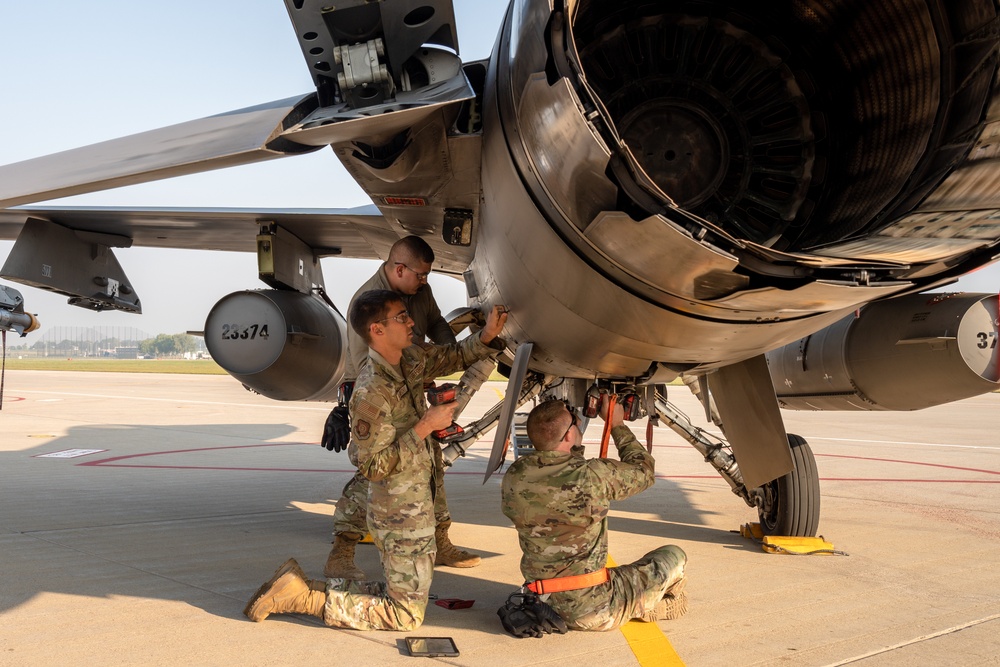
The single largest factor reducing aircraft availability is maintenance. Every flight hour generates maintenance requirements, and the relationship is not linear - flying more does not just require more maintenance, it requires maintenance sooner.
Modern military aircraft require anywhere from 10 to 50 maintenance man-hours for every flight hour, depending on the platform and mission type. A fourth-generation fighter might average 15-20 hours of maintenance per flight hour. A fifth-generation stealth aircraft with specialized coatings and integrated avionics can require 30-50 hours.
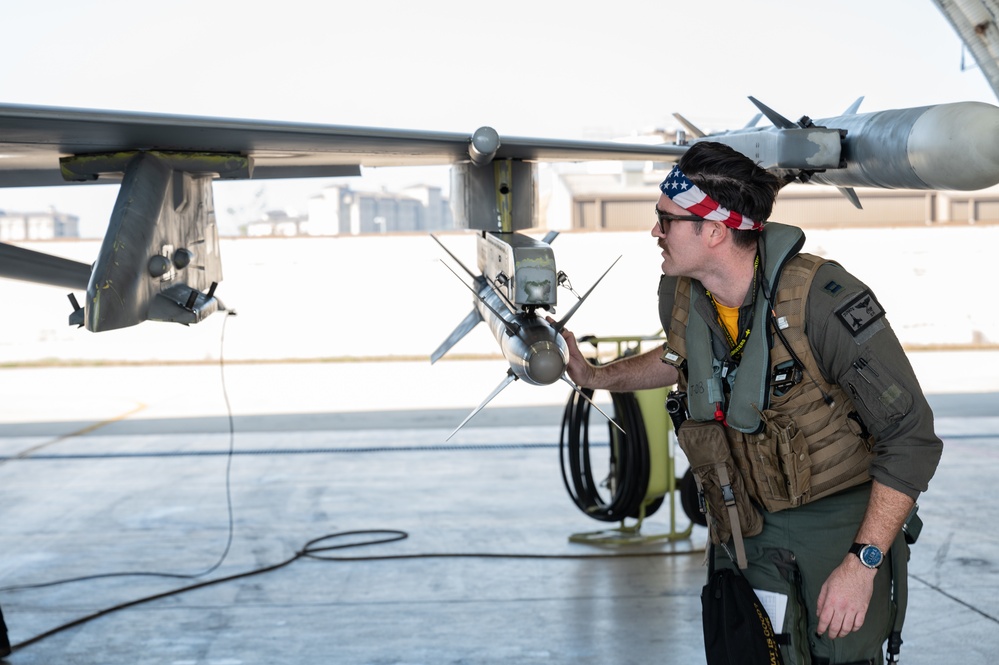
Maintenance divides into two categories. Scheduled maintenance occurs at predictable intervals based on flight hours, calendar time, or cycles (takeoffs and landings). This includes inspections, component replacements, and system checks that must happen regardless of whether anything appears wrong.
Unscheduled maintenance occurs when something breaks or degrades unexpectedly. A hydraulic leak, an avionics fault, a cracked component - these require immediate attention and can ground an aircraft until resolved. Unscheduled maintenance is inherently unpredictable, making it impossible to guarantee availability rates in advance.
The cumulative effect is that higher flight tempos produce lower availability later. Units that fly aggressively during an exercise or deployment will see availability drop in subsequent weeks as deferred maintenance catches up. This tradeoff is unavoidable.
Parts, Supply Chains, and Time
Even when maintenance crews are ready and the problem is diagnosed, availability depends on having the right parts available. Spare parts constraints are one of the most common reasons aircraft sit grounded longer than expected.
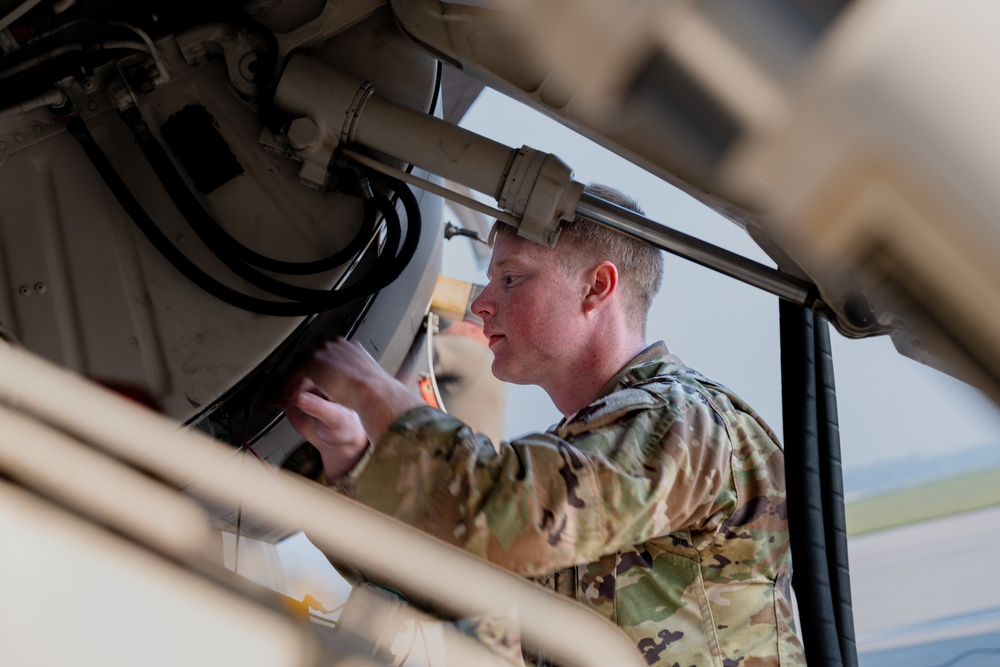
Military aircraft contain thousands of components, many of which are unique to that platform. A single missing part can ground an otherwise flyable aircraft. Supply chains must stock, track, and deliver parts to units worldwide - and delays compound quickly.
Cannibalization - removing parts from one aircraft to make another flyable - is a common workaround, but it trades one grounded aircraft for another. It solves immediate availability problems while creating longer-term ones.
Repair pipelines add further delays. Some components cannot be fixed at the unit level and must be sent to depots or contractors for repair. Round-trip times of weeks or months are common for complex avionics or engine components.
The result is that readiness depends heavily on logistics infrastructure that operates far from the flight line. A unit with skilled maintainers and modern aircraft can still suffer low availability if the supply chain cannot deliver.
Training, Upgrades, and Non-Combat Downtime
Not all unavailable aircraft are broken. A significant portion of downtime comes from planned activities that remove aircraft from operational status without involving repairs.
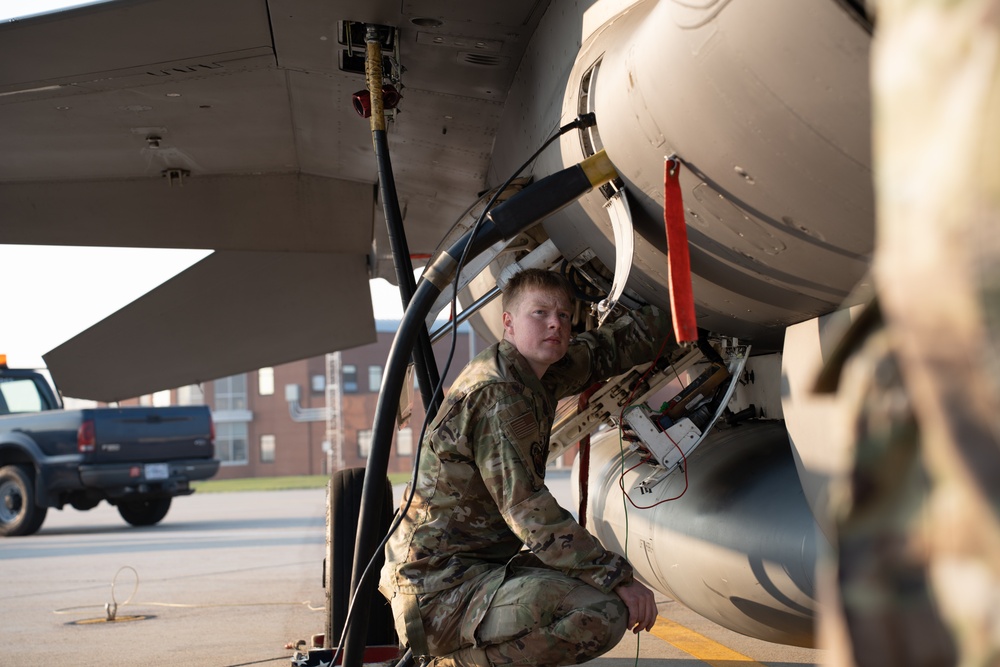
Software and hardware upgrades are continuous for modern platforms. New threat libraries, avionics updates, structural modifications, and weapons integration all require aircraft to be taken offline for days or weeks. These upgrades are essential for maintaining capability, but they reduce availability during implementation.
Depot-level maintenance involves comprehensive overhauls that occur every few years. Aircraft are disassembled, inspected, repaired, and reassembled over periods of months. While an aircraft is in depot, it does not count toward operational availability.
Training and test requirements also consume availability. Aircraft assigned to test squadrons, training units, or special programs may not be available for operational tasking even though they are technically flyable.
The distinction matters because "unavailable" does not mean "broken." Many aircraft counted as unavailable are undergoing planned work that keeps them effective over the long term.
Why Availability Numbers Are Often Misunderstood
Public discussions of aircraft availability often use numbers without context, leading to misleading conclusions. Several factors make availability comparisons more complicated than they appear.
Snapshot vs. sustained rates: A unit might achieve 85% availability for a specific inspection or exercise, but sustaining that rate over months is different. Snapshot rates can be temporarily inflated by surging maintenance or deferring other work.
Mission capable vs. fully mission capable: Headline numbers often report MC rates without clarifying that FMC rates are substantially lower. An 80% MC rate might correspond to 60% FMC, which significantly changes the operational picture.
Platform comparisons are misleading: Comparing availability rates across different aircraft types ignores that each platform has different maintenance requirements, mission profiles, and age distributions. A 70% rate for one aircraft is not equivalent to 70% for another.
Public vs. internal metrics: Reported availability numbers may use definitions that differ from internal operational metrics. What counts as "available" for congressional reporting may not match what a wing commander considers usable.
The bottom line is that single-number availability statistics rarely tell the full story. Context about what is being measured, over what period, and under what conditions is essential for meaningful interpretation.
Why This Matters Operationally
Availability shapes what forces can actually do, not just what they theoretically possess. Planners must account for realistic availability when sizing forces, allocating resources, and making operational decisions.
Force structure decisions must account for the fact that only a portion of inventory will be available at any time. A requirement for 200 available aircraft means procuring significantly more than 200. The gap between requirement and procurement depends on expected availability rates.
Surge capacity is limited by how quickly availability can be increased. Surging flight operations means surging maintenance, which requires people, parts, and infrastructure that may not scale quickly.
Operational planning must use realistic availability assumptions. Plans that assume 90% availability when 70% is realistic will fail when executed. Exercises help reveal actual availability under stress.
Understanding availability is not about pessimism - it is about realism. Effective military planning requires accepting what forces can actually deliver, not what inventory lists suggest.
Key Takeaways
- Availability and inventory are not the same. Owning aircraft does not mean having them ready to fly.
- Maintenance is the primary driver of unavailability. Every flight hour generates maintenance requirements that limit future availability.
- Parts and supply chains constrain recovery. A missing component can ground an aircraft regardless of maintenance capacity.
- Upgrades and depot work reduce availability even when nothing is broken. Planned downtime is essential but still removes aircraft from service.
- Mission capable rates overstate full capability. FMC rates are typically 10-20 points lower than MC rates.
- Availability numbers require context. Snapshot rates, definitions, and measurement periods all affect what numbers mean.
- Realistic planning requires realistic availability assumptions. Force sizing and operational plans must account for what is actually usable.