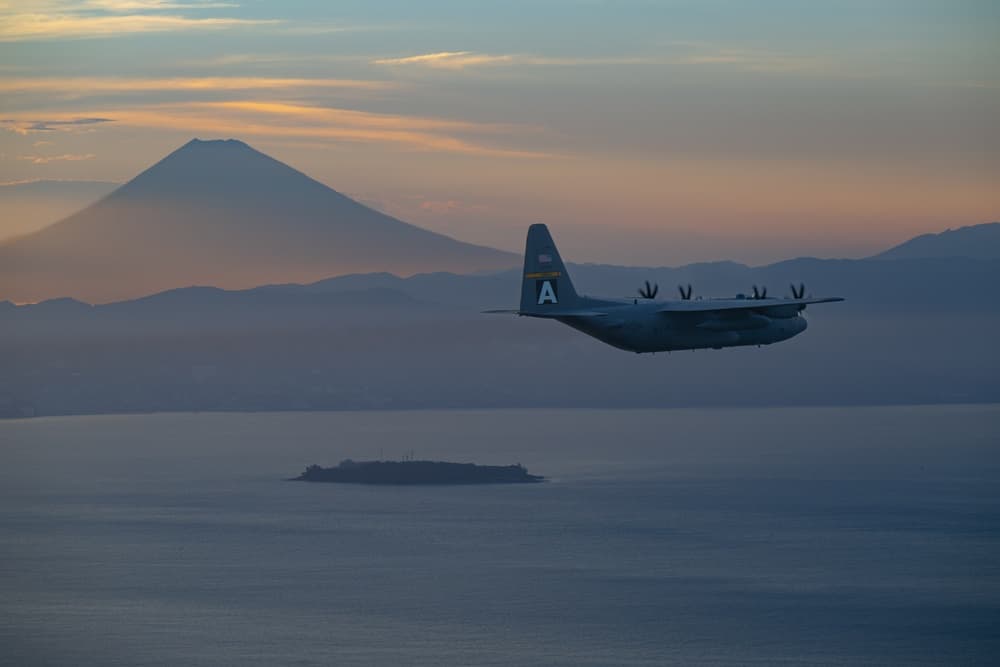
Few aircraft in history have demonstrated the staying power of the Lockheed C-130 Hercules. First flown in 1954, it entered service in 1956 and remains in production today - a span of nearly seven decades that no other military aircraft has matched while maintaining such active operational relevance. The C-130 has outlasted not only the specific threats it was designed to address but also multiple generations of aircraft intended to replace it.
This longevity is not merely a curiosity of defense procurement or bureaucratic inertia. The C-130 persists because it solved a fundamental problem - tactical airlift to austere locations - in a way that subsequent designs have failed to improve upon meaningfully. Every replacement attempt has encountered the same reality: the Hercules represents a near-optimal solution for a mission set that has not fundamentally changed despite transformations in technology, doctrine, and the nature of conflict.
Understanding why the C-130 endures requires examining what it was designed to do, how that design has proven adaptable, and why the military transport mission creates constraints that limit the utility of technological advancement. The story of the Hercules is ultimately a story about the difference between what militaries imagine they need and what operations actually require.
Origins: The Problem of Tactical Airlift
The C-130 emerged from a specific operational problem identified during the Korean War. American forces found themselves unable to sustain forward operations because existing transport aircraft could not operate from the short, unprepared airstrips near the front lines. The C-119 Flying Boxcar and other transports of the era required paved runways of substantial length, infrastructure that simply did not exist in the forward areas where supplies were most needed.
In 1951, the U.S. Air Force issued a requirement for a new tactical transport. The specifications called for an aircraft that could take off and land on rough, unprepared airstrips as short as 2,500 feet; carry a minimum of 92 combat troops or 64 paratroopers; fly at speeds up to 300 knots; and operate with a cargo compartment large enough to accommodate military vehicles and artillery. These requirements reflected hard lessons from Korea about the gap between strategic airlift capability and tactical necessity.
Lockheed's design team, led by Willis Hawkins, approached the problem with an emphasis on practical functionality rather than theoretical optimization. The resulting aircraft featured a high-wing configuration that kept engines and propellers clear of debris on unprepared surfaces. The rear loading ramp allowed vehicles to drive directly on and off, eliminating the need for ground handling equipment. Four turboprop engines provided the power needed for short-field performance while maintaining the fuel efficiency required for extended range.
The prototype, designated YC-130, first flew on August 23, 1954, from the Lockheed Air Terminal in Burbank, California. Test pilots Stanley Beltz and Roy Wimmer reported handling characteristics that exceeded expectations. The aircraft demonstrated the short-field performance required while proving docile and predictable in flight, qualities that would prove essential for operations in demanding environments by crews with varying experience levels.
What distinguished the C-130 from previous designs was not any single revolutionary feature but rather the integration of proven technologies into a configuration optimized for the tactical airlift mission. The Allison T56 turboprop engines were reliable and fuel-efficient. The airframe was robust enough to absorb the stresses of rough-field operations. The cargo compartment dimensions became a de facto standard that influenced the design of military vehicles and equipment for decades.
Design Philosophy: Rugged Simplicity
The C-130's endurance stems partly from design decisions that prioritized capability over sophistication. The aircraft was designed to be maintained in austere conditions by personnel without access to specialized equipment or facilities. Systems were designed with redundancy and damage tolerance rather than optimization for weight or efficiency. This approach has proven remarkably prescient as the aircraft operates in environments its original designers could not have anticipated.
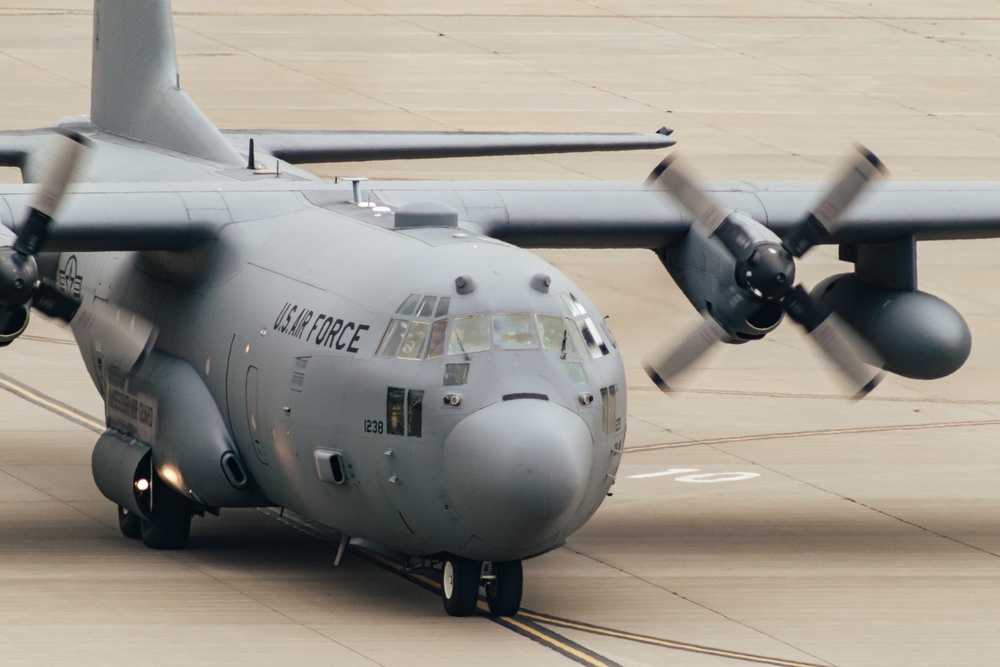
The cargo compartment dimensions - 10 feet wide, 9 feet tall, and originally 41 feet long - became an unofficial standard for military logistics. Equipment designers knew their products needed to fit through the C-130's doors and down its ramp. This created a self-reinforcing cycle: the more equipment was sized for C-130 transport, the more essential the C-130 became, and the harder it became to justify a replacement with different dimensions.
Short-takeoff-and-landing (STOL) capability was achieved through a combination of high-lift wing design, powerful engines, and robust landing gear capable of absorbing the impacts of unprepared surfaces. The aircraft can operate from runways as short as 3,000 feet, and specialized variants have demonstrated even shorter performance. This capability has proven essential in every major American military operation since Vietnam, enabling the delivery of supplies and personnel to locations inaccessible to larger transports.
The four-engine configuration, while less fuel-efficient than a twin-engine design would be, provides redundancy that has saved aircraft and crews repeatedly. The C-130 can fly on two engines if necessary, though performance is significantly degraded. More importantly, the four-engine layout spreads the thrust across the wing in a way that improves handling during asymmetric power situations and reduces the consequences of a single engine failure.
Crew stations were designed for functionality rather than comfort. The original cockpit layout, while updated significantly in the J-model, emphasized visibility and access to controls over ergonomic optimization. The aircraft was designed to be flown by crews who might be fatigued, operating in difficult conditions, with minimal automation assistance. This approach has aged well as the aircraft has taken on missions that demand flexibility and judgment that automated systems still struggle to replicate.
Operational Roles Across Decades
The C-130's operational history spans every major American military engagement since Vietnam and extends to humanitarian operations, disaster relief, and specialized missions that were never part of its original design brief. This versatility reflects both the flexibility of the basic airframe and the willingness of operators to adapt it for missions its designers never envisioned.
Vietnam: Proving Ground
Vietnam established the C-130 as the backbone of tactical airlift. The aircraft operated from forward airstrips that no other transport could use, delivering ammunition, food, medical supplies, and reinforcements to bases throughout South Vietnam. The siege of Khe Sanh in 1968 demonstrated both the capability and limitations of the platform. C-130s delivered essential supplies under fire, though losses to ground fire eventually forced a shift to smaller C-123 aircraft and helicopter resupply for the most exposed deliveries.
It was in Vietnam that the gunship variant emerged. The AC-130 Spectre, equipped with side-firing weapons including 20mm Vulcan cannons, 40mm Bofors guns, and eventually 105mm howitzers, provided devastating fire support for ground forces. Operating primarily at night to reduce vulnerability, AC-130s became one of the most effective close air support platforms of the war, a role the type continues to perform today with updated weapons and sensors.

Post-Vietnam Operations
The decades following Vietnam saw the C-130 deployed in operations ranging from Grenada to Panama, from Somalia to the Balkans. In each case, the aircraft's ability to operate from austere airfields and deliver substantial payloads proved essential. Operation Just Cause in Panama featured C-130s delivering paratroopers directly onto airfields while other C-130s provided gunship support for ground forces.
Desert Storm and subsequent Middle East operations reinforced the C-130's role as the tactical transport of choice. While C-17s handled the heavy strategic airlift, C-130s moved supplies and personnel within theater, flying into forward operating locations that larger aircraft could not reach. The Iraq and Afghanistan conflicts saw sustained C-130 operations across more than two decades, with the aircraft performing roles from routine logistics to special operations support.
Humanitarian and Disaster Relief
Beyond combat operations, the C-130 has become the aircraft of first response for humanitarian crises and natural disasters. Its ability to operate from damaged or improvised airfields makes it often the first fixed-wing aircraft into disaster zones. Following earthquakes, hurricanes, tsunamis, and other catastrophes, C-130s have delivered relief supplies when no other aircraft could access affected areas.
The Modular Airborne Fire Fighting System (MAFFS) turns C-130s into aerial firefighters, capable of dropping thousands of gallons of retardant on wildfires. Air National Guard C-130 units equipped with MAFFS deploy regularly during fire seasons, providing a capability that no purpose-built firefighting aircraft has matched in terms of payload, range, and operational flexibility.
Special Operations
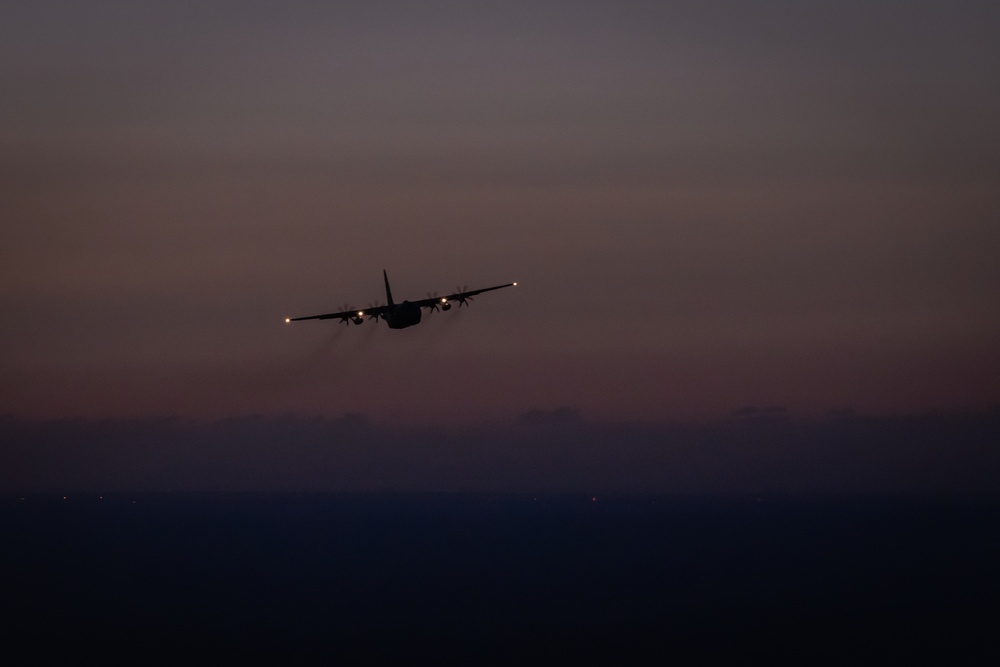
The MC-130 variants represent some of the most sophisticated aircraft in the U.S. inventory, despite their outward resemblance to standard transports. Equipped with terrain-following radar, electronic warfare systems, and precision navigation equipment, MC-130s support special operations forces by delivering personnel and equipment into denied areas. The psychological operations variant, EC-130J Commando Solo, broadcasts radio and television programming - a capability that has proven relevant from the Balkans to the Middle East.
Variant Evolution
The C-130's adaptability is reflected in the dozens of variants that have emerged over its service life. The following table summarizes the major current production and operational variants, though it represents only a fraction of the specialized configurations that have been developed.
C-130 Hercules Variant Comparison Chart
Complete specifications and capabilities across all major C-130 variants currently in production or operational service
C-130J Super Hercules
Tactical airlift
AE 2100D3 engines, 6-blade props, glass cockpit, 3-crew operation
U.S. Air Force, RAF, 20+ nations
C-130J-30
Extended tactical airlift
15-foot fuselage stretch, 8 pallet positions vs 6, 128 troops
U.S. Air Force, RAF, multiple allies
AC-130J Ghostrider
Close air support / gunship
30mm cannon, 105mm howitzer, GBU-39 SDB, AGM-176 Griffin missiles
AFSOC
MC-130J Commando II
Special ops infiltration/exfiltration
Terrain-following radar, EW suite, FLIR, AAR capable
AFSOC
HC-130J Combat King II
Personnel recovery / CSAR
AAR pods, PJ team capability, extended fuel, combat rescue systems
U.S. Air Force ACC
KC-130J
Aerial refueling tanker
Drogue pods for probe-equipped aircraft, dual role tanker/transport
USMC, multiple allies
EC-130J Commando Solo
Psychological operations broadcast
AM/FM/HF/TV transmitters, can override local broadcasts
193rd SOW (PA ANG)
WC-130J Weatherbird
Weather reconnaissance
Dropsonde systems, storm penetration capable, real-time data link
53rd WRS (Hurricane Hunters)
LC-130H Skibird
Polar/Antarctic airlift
Retractable ski-wheel gear, JATO capable, cold weather ops
109th AW (NY ANG)
C-130H Hercules
Tactical airlift (legacy)
T56 engines, 4-blade props, analog cockpit, proven reliability
60+ nations worldwide
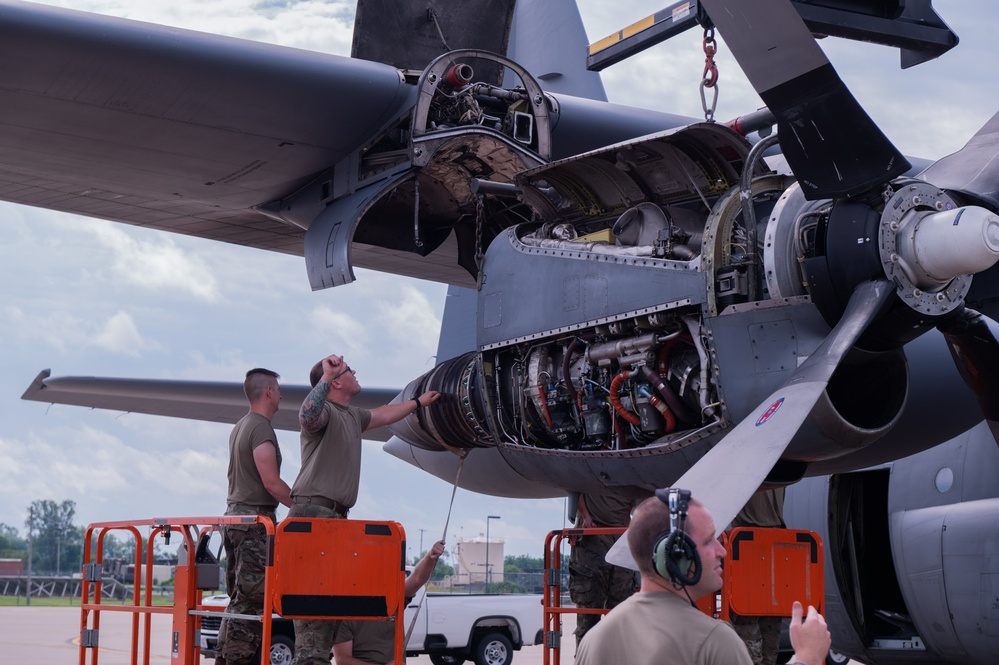
The transition from the C-130H to the C-130J represents the most significant upgrade in the platform's history. The J-model features Rolls-Royce AE 2100D3 turboprop engines producing approximately 4,637 shaft horsepower each, a substantial increase over the T56 engines of previous variants. Six-blade composite propellers improve efficiency and reduce noise. The glass cockpit replaces analog instruments with digital displays, reducing crew workload and enabling operation with three crew members instead of the five required by earlier models.
Despite these improvements, the J-model maintains dimensional compatibility with previous variants. The cargo compartment remains the same size, ensuring that equipment designed for earlier C-130s can be transported without modification. This backward compatibility has been essential to the J-model's adoption, as it allows operators to upgrade their fleets without replacing their ground equipment or retraining their loadmasters in fundamentally new procedures.
Global Adoption and Standardization
More than 70 nations have operated the C-130 Hercules, making it one of the most widely adopted military aircraft in history. This global presence creates a network effect that reinforces the platform's position: operators share maintenance experience, parts inventories can be pooled during coalition operations, and training programs benefit from accumulated institutional knowledge across decades and continents.
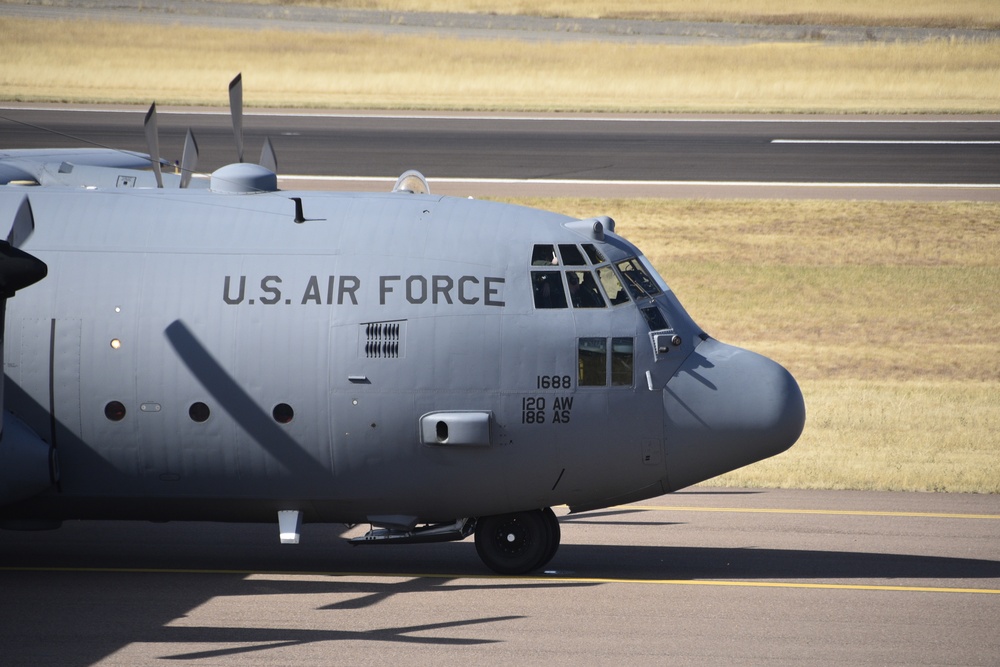
Coalition interoperability has proven particularly valuable. During NATO operations, C-130s from multiple nations can share airfields, ground equipment, and even crews in emergencies. This standardization extends beyond the aircraft itself to the pallets, containers, and loading procedures used across allied air forces. Any replacement for the C-130 would need to maintain this interoperability or force a coordinated transition across dozens of nations, a practical impossibility given varying procurement timelines and budget constraints.
For smaller nations with limited defense budgets, the C-130 offers a multi-role platform that can serve as transport, tanker, maritime patrol, and disaster relief aircraft. Purchasing and maintaining a dedicated aircraft for each of these missions would be prohibitively expensive. The C-130's ability to switch between roles with relatively simple modifications makes it economically viable for operators who cannot afford specialized fleets.
The used aircraft market further extends the C-130's reach. Older C-130H models retired by wealthier nations often find new operators with more modest budgets. This secondary market keeps the global C-130 fleet large and diverse, maintaining the economies of scale in parts production and the institutional knowledge base that supports the type worldwide.
Why Replacement Attempts Fail
Understanding why the C-130 remains in service requires examining why efforts to replace it have failed. These failures are not primarily about bureaucratic inertia or parochial defense of existing programs - though those factors exist. Rather, they reflect fundamental constraints of the tactical airlift mission that make improvement difficult and replacement impractical.
The C-17: Too Large for Tactical Missions
The McDonnell Douglas (now Boeing) C-17 Globemaster III was designed to bridge the gap between strategic and tactical airlift. It can carry more than the C-130 while operating from shorter runways than the C-5 Galaxy. However, the C-17 requires runways of at least 3,500 feet - longer than the C-130 needs - and its size limits its ability to operate from truly austere locations. The C-17 costs substantially more to operate per flight hour and cannot reach the small airstrips that C-130s use routinely.
The C-17 has proven excellent for its designed role: delivering heavy equipment to forward airfields. But it has not replaced the C-130 because the missions are different. The C-17 moves cargo from major bases to theater; the C-130 moves it from theater to the forward operating locations where it is actually needed. Both aircraft are necessary, and neither can fully substitute for the other.
The C-27J: Too Small for the Mission
The C-27J Spartan represented an attempt to replace the C-130 at the smaller end of the tactical airlift spectrum. Originally procured for the U.S. Army and later transferred to the Air Force, the C-27J offered lower operating costs and the ability to use even smaller airfields than the C-130. However, its payload capacity - roughly half that of the C-130 - proved insufficient for many missions that the larger aircraft handles routinely.
The U.S. Air Force ultimately retired its C-27J fleet, transferring aircraft to the Coast Guard and Special Operations Command. The program's failure illustrated a key constraint: tactical airlift operates in an environment where payloads cannot easily be split across multiple flights. The difference between delivering a load in one sortie versus two has implications for scheduling, crew availability, fuel consumption, and exposure to threats that make the smaller aircraft's cost advantages largely theoretical.
Advanced Technology Concepts
Various advanced concepts have been proposed to replace the C-130, including tiltrotor aircraft, hybrid airships, and advanced vertical takeoff and landing designs. Each offers theoretical advantages in certain mission parameters such as shorter takeoff distance, greater range, or reduced runway requirements. None has achieved the combination of payload, range, reliability, and affordability that the C-130 provides.
The V-22 Osprey, for example, offers true vertical takeoff capability that the C-130 cannot match. But its payload capacity is roughly one-tenth that of the C-130, and its complexity translates to higher maintenance requirements and operating costs. The Osprey serves an important role in special operations and Marine Corps assault support, but it has not replaced C-130s because it cannot move the volume of cargo that tactical airlift requires.
The fundamental problem facing replacement concepts is that the C-130 represents a near-optimal solution for the constraints of tactical airlift. Improving one parameter - speed, payload, runway length - typically degrades others in ways that reduce overall mission effectiveness. The C-130's four-engine turboprop configuration may seem dated compared to modern twin-engine jets, but it provides redundancy, fuel efficiency at medium altitudes, and the power for short-field performance that more advanced designs struggle to match.
Why the C-130 Still Matters
The C-130's continued relevance reflects the reality that tactical airlift requirements have not fundamentally changed despite transformations in technology and doctrine. Ground forces still need supplies delivered to forward locations. Those locations still often lack the infrastructure for larger aircraft. The cargo - ammunition, fuel, medical supplies, vehicles, and personnel - still needs to fit through doors and down ramps. The C-130 was designed to solve these problems, and it continues to solve them effectively.
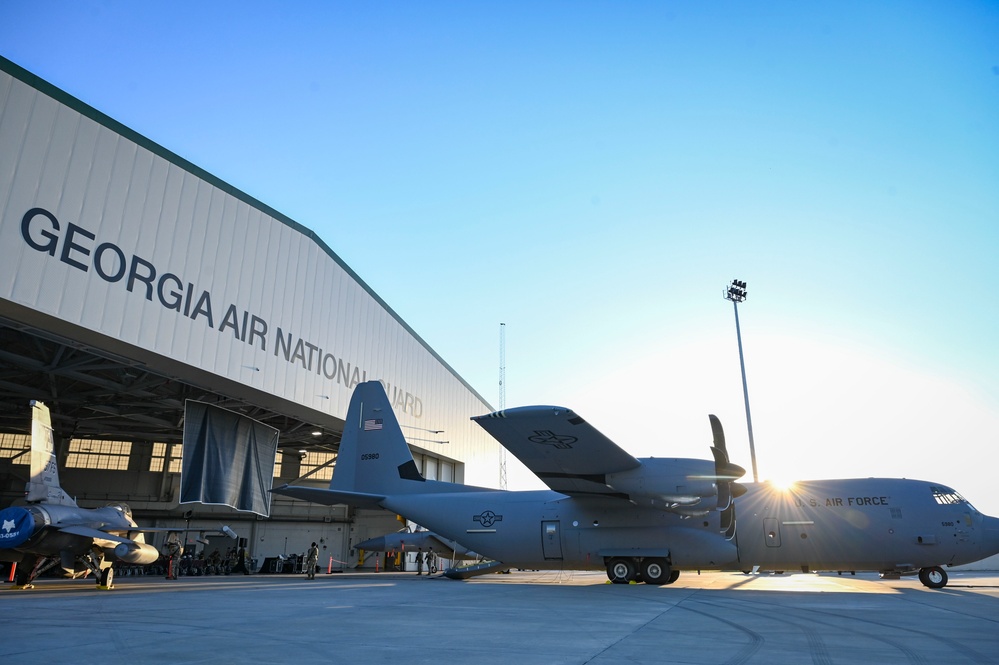
Current production C-130Js incorporate technologies that were unavailable when the aircraft was designed. Digital avionics reduce crew workload and improve situational awareness. Modern engines provide better performance with improved fuel efficiency. Defensive systems protect against threats that did not exist in 1954. But these improvements are evolutionary rather than revolutionary - they make the C-130 more effective at its established mission rather than enabling fundamentally new capabilities.
The institutional investment in the C-130 represents another factor in its continued relevance. Training programs, maintenance infrastructure, logistics systems, and operational procedures have been refined over decades. Replacing the aircraft would require replacing all of this institutional knowledge - a cost that is difficult to quantify but substantial in practice. Every year the C-130 remains in service, the investment in supporting it deepens and the switching costs for any replacement increase.
For the foreseeable future, the C-130 will remain in production and service. Lockheed Martin continues to receive orders from the United States and allied nations. Current production rates suggest the aircraft will remain in production well into the 2030s, and aircraft being delivered today will likely serve until the 2070s. The Hercules may eventually be replaced, but no replacement is currently on the horizon, and any successor will need to demonstrate capabilities that seven decades of alternatives have failed to achieve.
Frequently Asked Questions
Common questions about the C-130 Hercules and its role in modern military operations.
Why is the C-130 Hercules still in service after 70 years?
The C-130 remains in service because its fundamental design solved a problem that has not changed: tactical airlift requires an aircraft that can operate from austere airfields, carry substantial cargo, and adapt to diverse missions. The airframe has proven remarkably capable of accepting upgrades including new engines, avionics, and mission systems while maintaining the operational flexibility that made it effective originally. The aircraft's high-wing configuration keeps engines clear of debris on unprepared surfaces, the rear loading ramp allows vehicles to drive directly on and off without ground equipment, and four turboprop engines provide both short-field performance and fuel efficiency. Every attempt to replace it has either failed or produced aircraft that could not match its combination of capabilities, making the C-130 essentially irreplaceable for tactical airlift missions worldwide.
What is the difference between C-130H and C-130J Super Hercules?
The C-130J Super Hercules represents a comprehensive modernization of the platform with significant improvements across all major systems. The J-model features Rolls-Royce AE 2100D3 turboprop engines producing 4,637 shaft horsepower each, paired with six-blade Dowty R391 composite propellers that replace the four-blade propellers and Allison T56 engines of the H-model. The digital glass cockpit with head-up displays and integrated avionics reduces the crew requirement from five to three personnel. Performance improvements include 40 percent greater range, 21 percent higher maximum speed, 40 percent shorter takeoff distance, and 50 percent greater climb rate. The J-model also features improved reliability with 50 percent fewer unscheduled maintenance actions. Despite these substantial upgrades, both variants maintain the same external dimensions and cargo bay configuration, ensuring compatibility with existing cargo and equipment.
What missions does the C-130 perform?
The C-130 performs an extraordinarily diverse range of missions that no other single airframe has matched. Primary roles include tactical airlift moving troops and cargo to forward locations, airdrop operations delivering supplies and paratroopers, aerial refueling through the KC-130 variant extending the range of helicopters and fixed-wing aircraft, special operations support via the MC-130 with terrain-following radar and electronic warfare systems, gunship missions through the AC-130 providing close air support with precision weapons, search and rescue operations using the HC-130 Combat King, and weather reconnaissance flying into hurricanes with the WC-130. Additional missions include firefighting with Modular Airborne Fire Fighting System equipment, humanitarian relief delivering aid to disaster zones, Antarctic resupply operating on ski-equipped LC-130s, and psychological operations broadcasting via the EC-130 Commando Solo. This mission versatility stems from the aircraft's unique ability to operate from short unprepared runways while carrying substantial payloads.
How many countries operate the C-130 Hercules?
More than 70 countries have operated the C-130 Hercules across its production history, making it one of the most widely adopted military aircraft ever built. Current operators include virtually every NATO member, major allies in the Pacific including Japan, South Korea, and Australia, and numerous nations across the Middle East, Africa, and South America. This global adoption creates significant standardization benefits for coalition operations as allied nations can share parts, maintenance procedures, and operational experience during joint missions. The widespread adoption also creates unique challenges for any replacement program, as a successor aircraft must satisfy the diverse requirements of operators ranging from major powers with unlimited budgets to smaller nations with constrained defense spending. The C-130's continued production ensures that newer operators can join the community while existing operators upgrade their fleets with the latest J-model variants.
What aircraft was supposed to replace the C-130?
Multiple programs have attempted to replace the C-130 over its seven-decade service life, and all have failed to fully succeed. The Advanced Medium STOL Transport studies in the 1970s explored next-generation tactical airlifters but never produced a viable replacement. The C-17 Globemaster III replaced the C-130 for strategic and theater airlift missions but cannot operate from the austere airfields that define tactical airlift requirements. The C-27J Spartan was intended as a light tactical transport but proved too small for many missions the C-130 performs routinely and was eventually retired from U.S. service. The Army and Air Force experimented with the Joint Cargo Aircraft program that ultimately failed due to interservice disagreements. None of these programs succeeded in fully replacing the Hercules because each either exceeded cost constraints, failed to match its operational flexibility, or could not operate from the short unprepared airfields the C-130 uses as a matter of routine.
How much cargo can a C-130 carry?
The C-130's cargo capacity varies by variant but represents substantial lift capability for a tactical transport. The C-130J can carry a maximum payload of approximately 42,000 pounds, though practical payloads depend on fuel requirements and mission profile. The cargo compartment measures 40 feet long, 10 feet wide, and 9 feet high in the standard variant, with the stretched C-130J-30 adding 15 feet of additional length. This space accommodates 92 combat-equipped troops, 64 paratroopers, 74 litter patients with medical attendants, or various vehicle and equipment configurations. The aircraft can carry two Humvees, a single M113 armored personnel carrier, or multiple 463L pallets of containerized cargo. The rear loading ramp allows vehicles to drive directly on and off, eliminating the need for specialized ground handling equipment that may not be available at austere locations.
What is the range of the C-130 Hercules?
The C-130's range depends significantly on payload and variant, reflecting the fundamental tradeoff between fuel and cargo in tactical airlift operations. The C-130J with a 35,000-pound payload can fly approximately 2,000 nautical miles, while the maximum range with reduced payload approaches 3,000 nautical miles. The stretched C-130J-30 offers similar performance with additional cargo capacity. Ferry range without payload exceeds 5,000 nautical miles with external fuel tanks. These figures assume standard atmospheric conditions and optimal flight profiles. Actual operational range varies based on factors including weather, altitude requirements, and mission-specific fuel reserves. The aircraft's aerial refueling capability, available on certain variants, effectively extends range indefinitely for extended operations requiring persistent presence over distant locations.
How fast does the C-130 fly?
The C-130J Super Hercules cruises at approximately 348 knots or 400 miles per hour at optimal altitude, with a maximum speed of 417 miles per hour. This represents a 21 percent improvement over the older C-130H variant. While these speeds are modest compared to jet transports, they reflect the design priorities of tactical airlift where the ability to operate from short unprepared runways matters more than cruise speed. The turboprop engines that enable short-field performance also provide excellent fuel efficiency at medium altitudes, allowing the C-130 to loiter over objective areas or transit long distances without refueling. For airdrop missions, the aircraft typically operates at much lower speeds around 130 knots to ensure accurate delivery of personnel and cargo to designated drop zones.
What engines power the C-130?
The C-130 has used two primary engine families across its production history. Earlier variants including the C-130H use four Allison T56-A-15 turboprop engines, each producing 4,590 equivalent shaft horsepower and driving four-blade Hamilton Sundstrand propellers. These engines established the C-130's reputation for reliability and have accumulated billions of flight hours across the global fleet. The C-130J Super Hercules features four Rolls-Royce AE 2100D3 turboprops producing 4,637 shaft horsepower each, paired with six-blade Dowty R391 composite propellers. The newer powerplant offers improved fuel efficiency, reduced maintenance requirements, and better high-altitude performance. Both engine types share the fundamental turboprop architecture that provides the power needed for short-field operations while maintaining the fuel efficiency required for extended range missions.
What is the AC-130 gunship?
The AC-130 gunship is a heavily armed ground-attack variant of the C-130 designed to provide close air support, air interdiction, and force protection for ground forces. The current AC-130J Ghostrider operated by Air Force Special Operations Command carries a 30mm GAU-23 cannon, 105mm M102 howitzer, and precision-guided munitions including GBU-39 Small Diameter Bombs and AGM-176 Griffin missiles. The aircraft features advanced sensors including synthetic aperture radar, electro-optical and infrared cameras, and fire control systems that enable precision engagement in all weather conditions. AC-130s typically operate at night, orbiting above the battlefield in a pylon turn that keeps all weapons trained on targets below. The platform has proven highly effective in counterinsurgency operations where its ability to loiter overhead and deliver graduated firepower provides ground commanders with responsive and discriminating close air support unavailable from other platforms.
What is the MC-130 special operations aircraft?
The MC-130 is a special operations variant of the C-130 designed to infiltrate, exfiltrate, and resupply special operations forces in hostile or denied territory. The current MC-130J Commando II operated by Air Force Special Operations Command features terrain-following and terrain-avoidance radar enabling low-altitude flight in adverse weather and at night, an electronic warfare suite for self-protection, and aerial refueling capability for both helicopters and tilt-rotor aircraft. The aircraft can conduct low-level infiltration using specialized navigation systems, precision airdrop of personnel and equipment, and helicopter aerial refueling to extend the range of special operations rotary-wing assets. MC-130s have supported special operations worldwide, providing the unique combination of stealth, range, and payload capacity required to sustain forces operating in the most challenging environments.
What is the KC-130 tanker?
The KC-130 is an aerial refueling variant of the C-130 operated primarily by the U.S. Marine Corps and several allied nations. The aircraft uses the probe-and-drogue refueling system with two underwing refueling pods that can simultaneously transfer fuel to receiver aircraft. The KC-130J can offload approximately 50,000 pounds of fuel while retaining enough for its own return to base. Unlike dedicated tanker aircraft that cannot perform other missions, the KC-130 retains full cargo capability, allowing it to deliver supplies and then refuel aircraft on the return flight. This dual-role capability proves particularly valuable for expeditionary operations where dedicated tanker support may not be available. The KC-130 can refuel helicopters, tilt-rotor aircraft, and fixed-wing platforms including the F/A-18, AV-8B Harrier, and other probe-equipped aircraft.
What is the HC-130 Combat King?
The HC-130 Combat King is a search and rescue variant designed to support personnel recovery operations worldwide. The current HC-130J Combat King II features aerial refueling capability for helicopters, extended range fuel tanks, and specialized communication and sensor systems for locating and coordinating rescue of isolated personnel. The aircraft can deploy pararescue teams and survival equipment to personnel awaiting recovery, then refuel the rescue helicopters extending their range into denied or distant areas. HC-130s have supported recovery operations in every conflict since Vietnam, providing the long-range capability essential for reaching personnel in remote locations. The platform's ability to loiter overhead coordinating rescue efforts while simultaneously refueling recovery helicopters makes it uniquely suited for the personnel recovery mission.
What is the WC-130 Hurricane Hunter?
The WC-130J Weatherbird is a weather reconnaissance variant operated by the 53rd Weather Reconnaissance Squadron, known as the Hurricane Hunters, based at Keesler Air Force Base, Mississippi. The aircraft flies directly into tropical storms and hurricanes at altitudes between 500 and 10,000 feet, collecting meteorological data critical for storm tracking and intensity forecasting. Specialized equipment includes dropsonde systems that release expendable sensors through the aircraft to measure temperature, humidity, pressure, and wind speed throughout the storm's vertical structure. The data collected by WC-130s feeds directly into National Hurricane Center forecast models, significantly improving the accuracy of storm track and intensity predictions. The aircraft's robust construction and flight characteristics make it well-suited for penetrating the severe turbulence encountered within major hurricanes.
What is the EC-130 Commando Solo?
The EC-130J Commando Solo is a psychological operations and civil affairs broadcast platform operated by the 193rd Special Operations Wing of the Pennsylvania Air National Guard. The aircraft carries high-powered transmitters capable of broadcasting radio and television signals across a wide geographic area, overriding local broadcasts or reaching audiences in areas without functioning media infrastructure. Commando Solo missions support military operations by transmitting messages to hostile forces and civilian populations, counter propaganda efforts, and humanitarian communications during disaster relief operations. The aircraft can broadcast on AM, FM, HF, and television frequencies, providing comprehensive coverage of the electromagnetic spectrum. EC-130s have supported operations worldwide, from combat zones to disaster areas, providing a unique capability to communicate directly with target audiences.
Can the C-130 land on unpaved runways?
The C-130 was specifically designed to operate from unpaved, unprepared, and austere airfields that would be unusable by conventional transport aircraft. The aircraft routinely operates from dirt strips, gravel runways, grass fields, and even ice runways in Antarctica. Its high-wing configuration keeps engines and propellers clear of debris that could cause foreign object damage during ground operations. The robust landing gear absorbs the stresses of rough field operations, and the aircraft's short-field performance allows operation from runways as short as 3,000 feet under favorable conditions. This austere field capability defines the tactical airlift mission and represents the primary reason no replacement has successfully displaced the C-130. Aircraft designed for paved runways cannot reach the forward locations where tactical airlift is most needed, while aircraft capable of shorter landings typically cannot carry the C-130's payload.
How many crew members operate the C-130?
Crew requirements differ between C-130 variants based on cockpit automation and mission complexity. The older C-130H requires a crew of five: two pilots, a navigator, a flight engineer, and a loadmaster. The modernized C-130J Super Hercules reduces the basic crew to three personnel through digital cockpit automation that eliminates the navigator and flight engineer positions. Most missions include two loadmasters regardless of variant, bringing typical crews to five or more personnel. Specialized variants require additional crew members based on mission equipment. The AC-130 gunship carries combat systems officers, fire control officers, and sensor operators. The MC-130 special operations aircraft includes electronic warfare officers and additional loadmasters for complex infiltration missions. The reduction in basic aircrew on the J-model represents significant cost savings over the aircraft's operational life.
When was the C-130 first flown?
The prototype YC-130 first flew on August 23, 1954, from the Lockheed Air Terminal in Burbank, California. Test pilots Stanley Beltz and Roy Wimmer reported handling characteristics that exceeded expectations during the 61-minute maiden flight. The aircraft demonstrated the short-field performance specified in the original Air Force requirement while proving docile and predictable in flight. Production C-130As entered operational service with the 463rd Troop Carrier Wing at Ardmore Air Force Base, Oklahoma, in December 1956. The aircraft has remained in continuous production since that time, with over 2,700 aircraft delivered to operators in more than 70 countries. This production longevity of nearly 70 years is unmatched by any other military aircraft, reflecting the enduring validity of the original design for the tactical airlift mission.
Who manufactures the C-130?
Lockheed Martin manufactures the C-130 at its facility in Marietta, Georgia, continuing production that began at the original Lockheed Corporation plant in the same location. The Marietta facility has produced every C-130 since production began in the 1950s, accumulating unmatched manufacturing experience with the aircraft. The assembly line has undergone continuous modernization, with current production focused exclusively on C-130J Super Hercules variants. Lockheed Martin employs a substantial workforce at the Marietta plant supporting both new aircraft production and modernization programs for existing C-130s worldwide. The company's long-term investment in the platform ensures continued production, spare parts availability, and technical support for the global fleet for decades to come.
How much does a C-130J cost?
The cost of a C-130J varies significantly based on configuration, mission equipment, and procurement quantities. A basic C-130J-30 transport typically costs approximately 75 to 80 million dollars in recent U.S. Air Force procurements. Specialized variants cost substantially more based on mission-specific modifications. The AC-130J gunship exceeds 200 million dollars including weapons systems and sensors. The MC-130J special operations aircraft costs approximately 150 million dollars with its specialized equipment suite. Foreign military sales pricing includes additional factors including technology transfer, training, and initial spare parts packages. Despite these costs, the C-130 remains competitive with alternatives when lifecycle costs including maintenance, training, and operational flexibility are considered. The aircraft's long service life spreads acquisition costs across decades of operational use.
What is the service ceiling of the C-130?
The C-130J Super Hercules has a service ceiling of approximately 28,000 feet, though practical operating altitudes depend on payload and mission requirements. Most tactical airlift missions operate at medium altitudes between 20,000 and 25,000 feet where turboprop engines achieve optimal fuel efficiency. Airdrop missions require descent to lower altitudes appropriate for parachute deployment, typically between 800 and 1,500 feet above ground level for personnel drops. The C-130J's improved engines provide better high-altitude performance compared to earlier variants, enabling operation from high-elevation airfields in mountainous regions. Weather reconnaissance missions into hurricanes operate at much lower altitudes, sometimes below 1,000 feet, where storm conditions can be directly observed and measured.
What is the C-130J-30 stretched variant?
The C-130J-30 is an extended-fuselage variant of the Super Hercules featuring a 15-foot fuselage stretch that increases cargo compartment length from 40 feet to 55 feet. This additional space accommodates eight additional 463L cargo pallets, bringing total capacity to eight pallets compared to six in the standard C-130J. The stretched variant can carry 128 combat-equipped troops compared to 92 in the standard configuration. Despite the increased length and cargo capacity, the C-130J-30 maintains essentially the same flight performance as the standard variant due to the powerful Rolls-Royce engines. The stretched configuration has proven popular with operators requiring maximum cargo capacity, with many nations selecting the C-130J-30 as their primary tactical transport. The U.S. Air Force, Royal Air Force, and numerous other operators fly the extended variant alongside standard-length aircraft.
Can the C-130 be refueled in flight?
Certain C-130 variants are equipped for aerial refueling as receivers, significantly extending their operational range for long-duration missions. The MC-130J Commando II and HC-130J Combat King II feature refueling receptacles allowing them to receive fuel from tanker aircraft during flight. This capability proves essential for special operations and personnel recovery missions requiring extended range or persistent presence over distant locations. The standard C-130J transport does not include aerial refueling capability, as tactical airlift missions rarely require the extended range. Conversely, the KC-130J serves as a tanker aircraft, equipped with underwing refueling pods to transfer fuel to receiver aircraft including helicopters, tilt-rotors, and fixed-wing platforms using the probe-and-drogue system.
What is the C-130's takeoff distance?
The C-130J Super Hercules can take off in approximately 3,100 feet at maximum gross weight under standard atmospheric conditions, though actual distance varies based on payload, altitude, temperature, and runway surface. This short-field capability represents a 40 percent improvement over earlier C-130H variants and defines the aircraft's ability to operate from austere locations. Lighter payloads and favorable conditions reduce takeoff distance further, with lightly loaded aircraft departing in as little as 2,000 feet. Landing distances are similarly short, allowing operation from runways that would be unusable for conventional transport aircraft. This performance comes from the powerful turboprop engines and efficient propeller design that produce maximum thrust at low speeds, precisely when short-field performance matters most.
How does the C-130 airdrop work?
The C-130 conducts airdrop operations using its rear cargo ramp and specialized extraction systems designed for accurate delivery of personnel and equipment. For personnel drops, paratroopers exit through the side doors or off the lowered rear ramp at altitudes typically between 800 and 1,500 feet above ground level, with the aircraft flying at approximately 130 knots. Cargo airdrop uses several methods depending on the load. Container Delivery System bundles are extracted by parachute through the open ramp. Heavy equipment uses the Low Altitude Parachute Extraction System where a parachute deployed from the aircraft pulls loads directly off the ramp at very low altitudes. Precision Airdrop Systems use GPS guidance and steerable parachutes to deliver supplies within meters of designated points. The C-130's slow-flight characteristics and stable platform make it ideally suited for accurate airdrop operations.
What defensive systems does the C-130 have?
Modern C-130 variants carry integrated defensive systems designed to detect and defeat surface-to-air and air-to-air threats. The Large Aircraft Infrared Countermeasures system uses directed infrared energy to defeat heat-seeking missiles, replacing earlier flare-based systems with more effective laser jamming. Radar warning receivers detect and identify hostile radar emissions, alerting the crew to potential threats. Chaff and flare dispensers provide countermeasures against radar-guided and infrared missiles respectively. The AN/AAQ-24 Nemesis system provides 360-degree missile warning and automatic countermeasure deployment. Special operations variants including the MC-130 and AC-130 carry additional electronic warfare systems for self-protection in hostile environments. These defensive systems significantly improve survivability, though tactical transport operations still rely primarily on threat avoidance through routing, timing, and altitude management.
What is the C-130's fuel capacity?
The C-130J Super Hercules carries approximately 61,360 pounds of fuel in six integral wing tanks, providing the range and endurance required for tactical airlift missions. This internal capacity can be supplemented by external fuel tanks for extended range missions, though external tanks reduce cargo capacity and add aerodynamic drag. The KC-130J tanker variant includes additional internal fuel tankage in the cargo compartment, increasing total fuel available for offload to receiving aircraft. Fuel consumption varies significantly based on altitude, weight, and power settings, but the C-130J's efficient turboprop engines provide better fuel economy than comparable jet transports. A typical tactical airlift mission carrying moderate payload consumes approximately 5,000 pounds of fuel per hour of flight.
How long can the C-130 stay airborne?
The C-130's endurance depends on fuel load, payload, and operating altitude, with typical missions ranging from 4 to 10 hours. Maximum endurance with minimal payload and optimal altitude can exceed 14 hours, though crew fatigue becomes the limiting factor for extended missions. Special operations variants equipped for aerial refueling can remain airborne indefinitely through periodic tanker rendezvous, limited only by crew endurance and mechanical reliability. The AC-130 gunship routinely conducts missions exceeding 10 hours, orbiting over battlefields providing close air support throughout extended ground operations. Hurricane reconnaissance missions with the WC-130 typically last 8 to 10 hours, including multiple penetrations of the storm system. Crew augmentation through additional qualified personnel enables extended missions when operational requirements demand sustained presence.
What countries have the largest C-130 fleets?
The United States operates the largest C-130 fleet by a substantial margin, with over 400 aircraft distributed across the Air Force, Marine Corps, Coast Guard, and Air National Guard. Major allied operators include the United Kingdom, Australia, Canada, Japan, and South Korea, each maintaining fleets of 15 to 30 aircraft. Middle Eastern operators including Saudi Arabia, Egypt, and the United Arab Emirates maintain substantial fleets supporting regional operations. European nations including Italy, France, Germany, and the Netherlands operate C-130s alongside other tactical transports. Smaller nations across Africa, Asia, and South America typically operate fleets of 2 to 12 aircraft providing national airlift capability. The total global fleet exceeds 2,700 aircraft, with production continuing to replenish aging aircraft and expand operator capabilities.
What is the C-130's wingspan?
The C-130 has a wingspan of 132 feet 7 inches, a dimension that has remained essentially constant across all variants from the original C-130A to the current C-130J Super Hercules. This wingspan provides the lift required for short-field operations while remaining practical for operations at forward airfields with limited ramp space. The high-wing configuration positions the wings above the fuselage, keeping engines and propellers clear of ground debris and providing clearance for vehicle loading through the rear ramp. The outer wing sections are built as single continuous structures from wing tip to fuselage, providing structural strength while simplifying manufacturing. Each wing contains integral fuel tanks that provide the aircraft's substantial internal fuel capacity without requiring additional tankage in the fuselage.
How does the C-130 compare to the C-17 Globemaster?
The C-130 and C-17 Globemaster III serve complementary roles in the airlift fleet rather than competing for the same mission. The C-17 carries substantially more cargo, with a maximum payload of 170,900 pounds compared to the C-130's 42,000 pounds, and can transport outsized cargo including main battle tanks that cannot fit in the C-130. However, the C-17's size restricts it to larger, more developed airfields while the C-130 operates from austere locations inaccessible to the larger aircraft. The C-17 bridges strategic and tactical airlift, delivering large loads to intermediate staging bases where C-130s distribute cargo to forward locations. This complementary relationship explains why the C-17 did not replace the C-130 despite its greater capability in most quantitative measures. The tactical airlift mission requires an aircraft sized for austere operations, a requirement the C-17 cannot satisfy.
What humanitarian missions has the C-130 performed?
The C-130 has supported virtually every major humanitarian relief operation since its introduction, leveraging its ability to operate from damaged or improvised airfields to reach populations affected by disasters. Following the 2010 Haiti earthquake, C-130s operated from the damaged Port-au-Prince airport when few other aircraft could, delivering critical supplies in the disaster's immediate aftermath. Tsunami relief operations in Indonesia, Thailand, and Japan all depended on C-130 airlift to reach isolated coastal areas. The aircraft has delivered food to famine-affected regions of Africa, medical supplies to epidemic zones, and relief materials to flood and hurricane victims worldwide. The C-130's rear loading ramp enables rapid offload of palletized supplies without ground equipment, critical when infrastructure has been destroyed. This humanitarian capability represents a significant secondary value of tactical airlift forces maintained primarily for military purposes.
Can the C-130 operate from aircraft carriers?
The C-130 has demonstrated the ability to operate from aircraft carriers in limited tests, though this is not a normal operational capability. In 1963, a KC-130F conducted 29 touch-and-go landings and 21 full-stop landings aboard USS Forrestal without using arresting gear or catapults, proving the aircraft's remarkable short-field performance. The test pilot, Lieutenant James Flatley, received the Distinguished Flying Cross for this demonstration. However, the Navy determined that routine carrier operations were impractical due to the space required for the aircraft and the risks involved. The tests demonstrated theoretical capability rather than practical utility. The Marine Corps operates the KC-130 from shore bases to support expeditionary operations, providing aerial refueling for carrier-based aircraft without requiring the C-130 itself to operate from carriers.
What is the C-130's maximum gross weight?
The C-130J Super Hercules has a maximum gross takeoff weight of 164,000 pounds, representing the aircraft's maximum certified operating weight. This figure encompasses the aircraft's empty weight of approximately 75,000 pounds plus fuel, crew, and cargo. The stretched C-130J-30 shares this maximum gross weight despite its increased fuselage length. Actual operational weights depend on runway length, altitude, temperature, and mission requirements, with commanders balancing payload against the fuel required for the mission profile. Earlier C-130H variants had slightly lower maximum weights around 155,000 pounds. The robust landing gear and wing structure enable operation at these weights from unpaved surfaces that would damage aircraft designed for paved runway operations only.
What special operations missions use the C-130?
Special operations forces worldwide depend on C-130 variants for infiltration, exfiltration, resupply, and fire support missions. The MC-130J Commando II conducts low-level infiltration using terrain-following radar, inserting special operations teams into denied territory. The same aircraft provides aerial refueling for special operations helicopters, extending their range for deep penetration missions. The AC-130J Ghostrider provides precision fire support for ground operations, orbiting overhead with weapons trained on targets designated by ground controllers. Combat Talon variants have conducted specialized missions including prisoner rescues and unconventional warfare support. The C-130's combination of payload capacity, austere field capability, and adaptability to specialized mission equipment makes it essential to special operations forces that cannot rely on conventional airlift infrastructure in hostile or denied areas.
How does the C-130 perform in extreme cold?
The C-130 operates routinely in extreme cold conditions including Antarctic operations where temperatures drop below minus 50 degrees Fahrenheit. The LC-130 Skibird variant used by the New York Air National Guard features retractable skis that enable landing on snow and ice runways in Antarctica and Greenland, supporting scientific research stations inaccessible by any other means. Cold weather operations require specialized procedures including engine preheat, fuel management to prevent gelling, and extended warmup periods, but the aircraft's fundamental design proves reliable in extreme conditions. The turboprop engines perform well in cold, dense air that actually improves performance compared to hot weather operations. Antarctic missions represent among the most demanding flying conditions in the world, and the C-130 has supported polar research continuously since the 1950s.
What is the C-130 Harvest HAWK system?
Harvest HAWK (Hercules Airborne Weapons Kit) is a roll-on, roll-off weapons system that converts standard Marine Corps KC-130J tankers into armed overwatch aircraft without permanent modification. The system includes a precision strike package with AGM-114 Hellfire missiles and AGM-176 Griffin missiles, a targeting system with electro-optical and infrared sensors, and a communications suite for coordination with ground forces. Weapons are mounted on external pylons while the targeting system occupies a position inside the cargo bay. The modular design allows the aircraft to conduct armed overwatch missions when required, then remove the weapons kit to resume tanker or transport duties. This flexibility provides ground commanders with additional fire support options without requiring dedicated gunship aircraft for every deployment.
How is the C-130 maintained?
C-130 maintenance follows a tiered structure ranging from flight line servicing to major depot overhauls. Organizational level maintenance includes preflight inspections, minor repairs, and routine servicing performed by unit personnel at the operating location. Intermediate maintenance addresses more complex repairs requiring specialized equipment but still accomplished at the unit level. Depot level maintenance including major structural inspections, component overhaul, and programmed modifications occurs at dedicated facilities including Warner Robins Air Logistics Complex in Georgia. The aircraft undergoes programmed depot maintenance approximately every five to six years, with inspections and repairs based on flight hours and calendar time. The C-130's design for austere field operations extends to maintenance, with systems accessible and repairable using relatively simple tools and procedures. This maintainability contributes to the high mission capable rates the fleet achieves worldwide.
What avionics does the C-130J have?
The C-130J Super Hercules features a fully integrated digital avionics suite that represents a generational improvement over earlier variants. The cockpit includes four multifunction displays presenting flight, navigation, and systems information in formats selectable by the crew. Dual head-up displays provide primary flight reference and navigation data without requiring pilots to look down at instruments. The mission computer integrates inputs from multiple sensors and systems, automating many functions previously requiring dedicated crew members. Navigation uses embedded GPS and inertial systems providing precise position information worldwide. The flight management system automates performance calculations, fuel management, and flight planning. Digital data links enable communication with ground controllers and other aircraft. This avionics modernization reduces crew workload while improving navigation accuracy, situational awareness, and mission effectiveness.
How does the C-130 land on short runways?
The C-130 achieves short landing distances through a combination of design features and pilot technique. The turboprop engines can be reversed immediately upon touchdown, using propeller blade pitch reversal to generate braking thrust supplementing wheel brakes. The high-lift wing with Fowler flaps generates substantial lift at low speeds, enabling approach speeds around 110 knots depending on weight. The robust landing gear absorbs high sink rates, allowing firm touchdowns that minimize float distance. Pilots use specialized short-field techniques including precise airspeed control, steep approach angles, and immediate power reduction upon touchdown. Under favorable conditions, a lightly loaded C-130J can land in approximately 2,000 feet. These short-field characteristics define the C-130's tactical utility, enabling delivery of cargo directly to forward locations inaccessible to conventional transports.
What is the C-130's combat record?
The C-130 has participated in every American military operation since its introduction in 1956, compiling an unmatched combat record across seven decades. In Vietnam, C-130s flew tactical airlift throughout the theater while AC-130 gunships provided devastating close air support. Desert Storm saw massive C-130 operations moving troops and supplies across the theater. Operations in Afghanistan and Iraq depended on C-130s for intra-theater airlift to forward operating bases inaccessible to larger aircraft. Special operations variants have supported classified missions worldwide. The aircraft has sustained combat losses, with airframes destroyed by ground fire, accidents, and enemy action, but the fleet has proven remarkably resilient and survivable for an aircraft operating routinely in hostile environments. Every major military operation validates the C-130's continued relevance for tactical airlift under combat conditions.
What training is required to fly the C-130?
C-130 pilot training follows completion of undergraduate pilot training and assignment to the mobility aircraft pipeline. Initial qualification training at Little Rock Air Force Base, Arkansas takes approximately four months, covering aircraft systems, normal and emergency procedures, and basic mission skills. Pilots learn formation flight, airdrop procedures, and low-level navigation. Following initial qualification, pilots complete mission qualification training at their operational unit, learning specific mission equipment and tactics. Special operations variants require additional training including survival, evasion, resistance, and escape courses. AC-130 training includes weapons employment and fire control procedures. Loadmaster training covers cargo loading, airdrop rigging, and emergency procedures. Total training investment for a fully qualified C-130 crew represents thousands of flight hours and years of progressive experience building.
How does the C-130 contribute to disaster response?
The C-130 serves as a primary platform for disaster response operations due to its ability to reach locations where infrastructure has been damaged or destroyed. Following hurricanes, earthquakes, and other disasters, C-130s typically represent the first fixed-wing aircraft to arrive, delivering search and rescue teams, medical supplies, food, water, and emergency equipment. The aircraft's ability to operate from short or damaged runways proves essential when airport infrastructure has been compromised. Airdrop capability enables delivery of supplies to areas completely inaccessible by surface transport. National Guard C-130 units frequently deploy for domestic disaster response, while active duty and allied aircraft support international relief operations. The MAFFS-equipped C-130s provide firefighting capability during wildfire season, dropping retardant on fires inaccessible to ground-based equipment. This disaster response capability represents a significant secondary value of maintaining tactical airlift forces.
What future upgrades are planned for the C-130?
Lockheed Martin continues developing upgrades for the C-130J to maintain its capabilities through mid-century and beyond. Block upgrade programs address avionics, communications, and navigation systems to maintain interoperability with evolving military networks. Propeller and engine improvements offer potential performance gains while reducing fuel consumption and maintenance requirements. Enhanced defensive systems provide improved protection against evolving threat systems. Digital engineering initiatives streamline modification incorporation and reduce certification timelines. The Air Force is exploring enhanced weapon systems for the AC-130J including directed energy weapons and hypersonic missiles. Communication upgrades will enable operation within the Joint All-Domain Command and Control architecture. These incremental improvements extend the C-130's viability rather than pursuing revolutionary replacement, reflecting recognition that the fundamental design remains sound for the tactical airlift mission.
How many C-130s have been built?
Lockheed Martin has delivered over 2,700 C-130 aircraft since production began in the 1950s, making it one of the most produced military aircraft in history. Production continues at the Marietta, Georgia facility with approximately 20 to 25 new C-130Js delivered annually. Peak production occurred during the Vietnam War era when monthly deliveries exceeded current annual rates. The total includes all variants from the original C-130A through current C-130J production. Many aircraft have been modified between variants over their service lives, with transports converted to tankers, special operations aircraft, or gunships as requirements evolved. The production longevity ensures ongoing manufacturing capability, spare parts availability, and technical support for the global fleet, advantages that would be lost if production ceased and had to restart for a future order.
What is the expected service life of a C-130?
The C-130's service life depends on variant, usage patterns, and maintenance investment, but properly maintained aircraft routinely exceed 40 years of operational service. Structural life is measured in equivalent baseline hours that account for the stress cycles accumulated during different flight profiles, with fatigue testing supporting service lives of 45,000 to 60,000 flight hours depending on variant. Many C-130s currently in service have accumulated 30,000 or more flight hours across decades of operations. Center wing box replacement programs extend structural life for aircraft whose original wing structures have reached fatigue limits. The C-130J's improved structural design and manufacturing techniques support extended service life compared to earlier variants. Current planning assumes C-130Js delivered today will remain in service until the 2070s, continuing the platform's remarkable longevity.
Why is the C-130 called the Hercules?
Lockheed named the C-130 after Hercules, the Roman adaptation of the Greek hero Heracles, famous for his strength and ability to accomplish impossible tasks. The name reflects the aircraft's mission of carrying heavy loads to difficult destinations, accomplishing airlift tasks that other aircraft cannot perform. The naming follows Lockheed's tradition of mythological names for transport aircraft, including the earlier Constellation and later Galaxy. Military personnel often use the informal nickname Herk rather than the full Hercules designation. The AC-130 gunship variants carry additional names including Spectre, Spooky, and Ghostrider that reflect their combat roles. The Hercules name has become synonymous with tactical airlift itself, with the aircraft defining expectations for the mission to a degree that makes replacement politically and operationally difficult.
How does the C-130 perform at high altitude airfields?
The C-130 operates effectively from high altitude airfields where reduced air density challenges aircraft performance, though payload capacity decreases as elevation increases. The C-130J's powerful turboprop engines perform better in the thinner air than the T56 engines of earlier variants, maintaining more of their sea level thrust at altitude. High altitude operations in Afghanistan frequently required C-130s to operate from airfields above 5,000 feet elevation in hot conditions, demanding careful payload planning to ensure adequate performance margins. The aircraft has operated from airfields above 10,000 feet elevation, though such operations require significant payload reductions. Turboprop engines maintain more consistent performance at altitude compared to turbofan engines, one reason the C-130 remains effective in mountainous regions where jet transports struggle.
What role does the C-130 play in Antarctic operations?
The LC-130 Skibird is the sole fixed-wing aircraft capable of landing at remote Antarctic research stations, making it essential to United States Antarctic Program operations. The New York Air National Guard's 109th Airlift Wing operates the only ski-equipped C-130 fleet in the world, providing airlift to McMurdo Station, the South Pole, and field research camps throughout the continent. The aircraft's retractable ski landing gear enables operations from snow and ice surfaces while conventional wheels allow use of paved runways in transit. Antarctic operations present extreme challenges including temperatures below minus 60 degrees Fahrenheit, whiteout conditions, and logistical isolation that makes maintenance and support difficult. The C-130's proven cold weather reliability and the specialized ski modification make it irreplaceable for polar logistics until alternative technologies mature.
How does the C-130 support aerial firefighting?
The Modular Airborne Fire Fighting System equips C-130s for aerial firefighting missions, converting military transports into effective firefighting platforms during peak wildfire season. The MAFFS system consists of five pressurized tanks containing fire retardant installed in the cargo compartment, with a total capacity of approximately 3,000 gallons. The retardant is discharged through a nozzle extended from the rear cargo door, creating a coverage pattern to slow fire spread or protect structures. Air National Guard and Air Force Reserve C-130 units activate for firefighting support when civilian resources are overwhelmed, typically during major wildfire outbreaks in the western United States. The MAFFS mission demonstrates the C-130's versatility and the value of military airlift capability for domestic emergency response beyond traditional military roles.