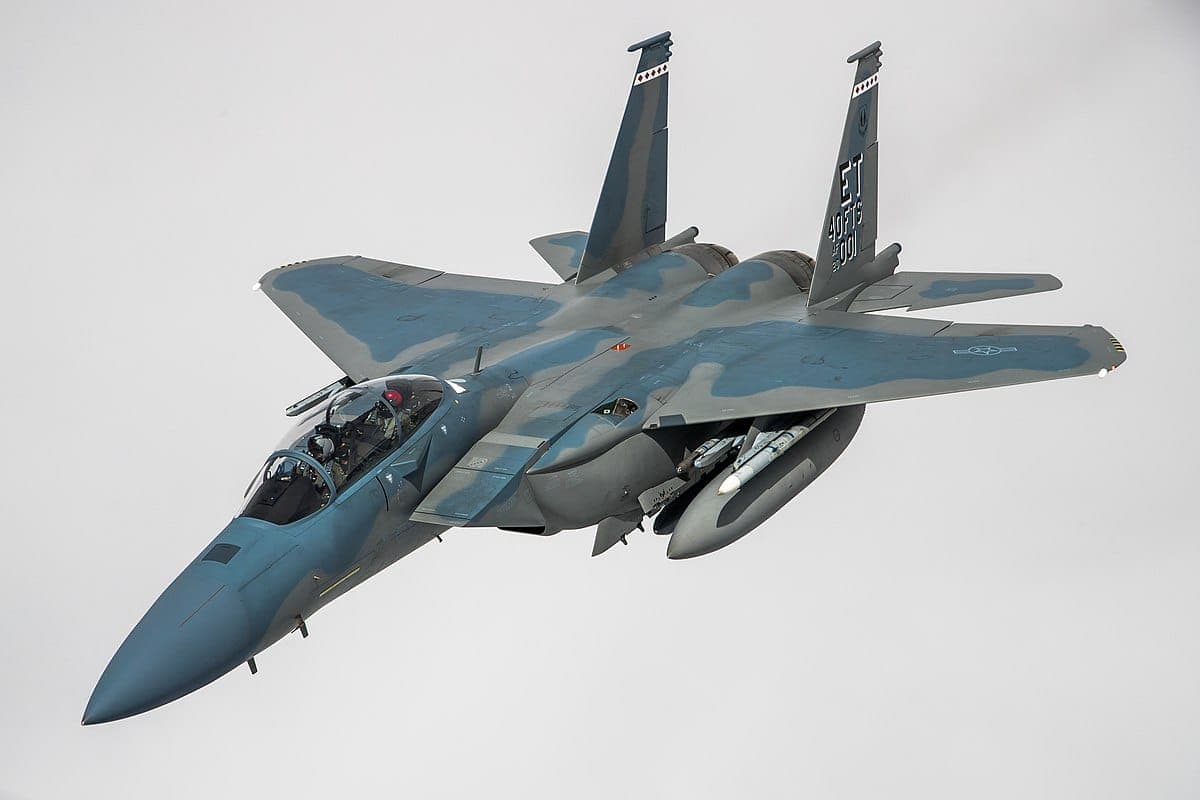
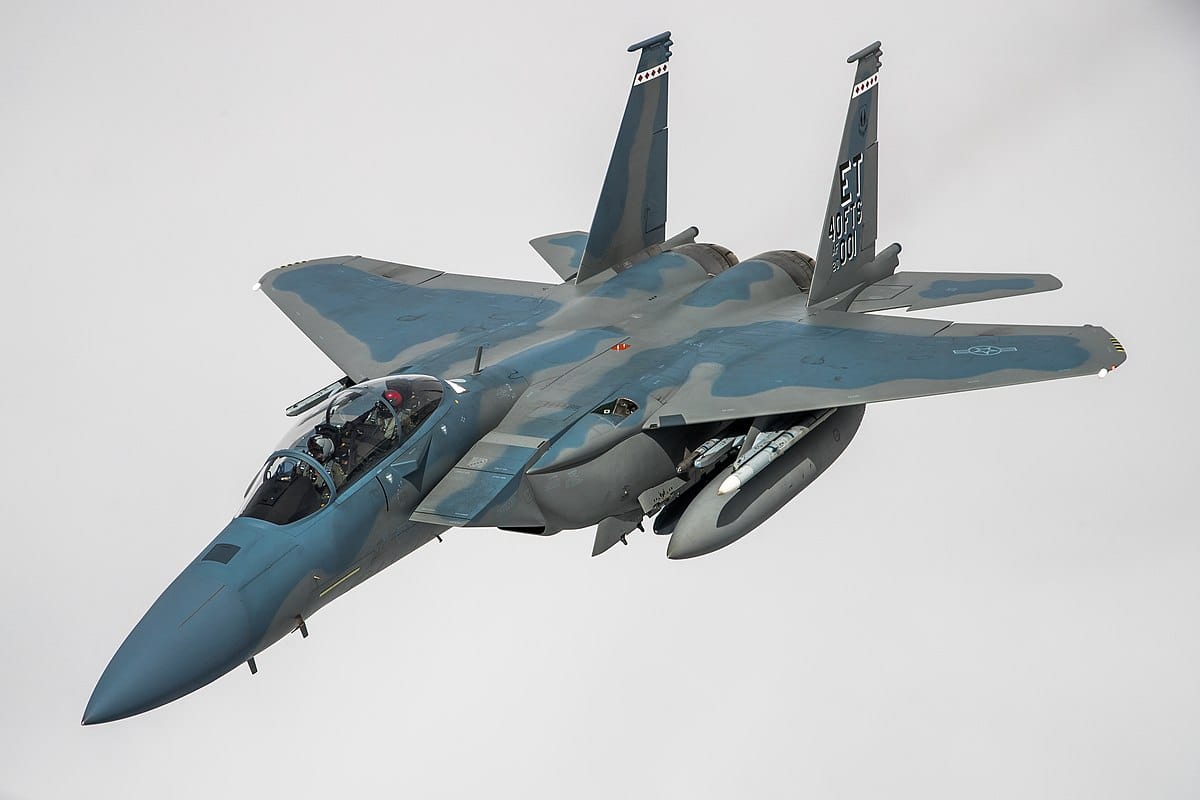
The F-15EX Eagle II represents the latest evolution of the legendary F-15 platform. While the basic airframe dates to the 1970s, the F-15EX incorporates modern avionics, advanced weapons systems, and digital architecture that make it one of the most capable fighters in the world.
Why the Air Force Chose the F-15EX
Rather than design an entirely new aircraft, the Air Force selected the F-15EX to replace aging F-15C/D models. The decision was based on:
- Proven reliability: The F-15 airframe has over 50 years of operational history
- Lower risk: Based on the combat-proven F-15SA sold to Saudi Arabia
- Cost efficiency: Lower acquisition and operating costs than fifth-generation fighters
- Weapons capacity: Unmatched ability to carry large missile loads
15 Incredible Facts
Performance
1. Unmatched missile capacity: The F-15EX can carry up to 22 air-to-air missiles, more than any other fighter. This includes 12 AIM-120 AMRAAMs and additional AIM-9X Sidewinders.
2. Speed demon: Maximum speed exceeds Mach 2.5 (1,650+ mph), faster than any operational fighter except the F-22.
3. Massive payload: Can carry over 29,500 pounds of external stores, including bombs, missiles, and fuel tanks.
4. Extended range: Conformal fuel tanks add 750 gallons of fuel without using wing hardpoints, extending combat radius significantly.
Avionics
5. Advanced radar: The Raytheon AN/APG-82(V)1 AESA radar provides superior range, resolution, and electronic warfare resistance compared to older mechanical-scan radars.
6. Digital backbone: The Advanced Display Core Processor II provides computing power for sensor fusion, threat detection, and mission systems.
7. EPAWSS: The Eagle Passive Active Warning Survivability System provides comprehensive electronic warfare protection against modern threats.
8. Open architecture: Software-defined systems allow rapid updates and integration of new weapons and capabilities.
Design Features
9. Fly-by-wire: Unlike earlier F-15s with mechanical flight controls, the F-15EX uses digital fly-by-wire for improved handling and safety.
10. Modern cockpit: Large-area displays replace analog instruments, reducing pilot workload and improving situational awareness.
11. Structural improvements: Designed for 20,000 flight hours, nearly double the original F-15's design life.
12. Reduced maintenance: Digital systems and improved components reduce maintenance requirements compared to legacy F-15s.
Program Details
13. Unit cost: Approximately $87.7 million per aircraft (flyaway cost), significantly less than F-35A at over $100 million.
14. Procurement plans: The Air Force plans to acquire at least 144 F-15EX aircraft to replace aging F-15C/D models.
15. First delivery: Boeing delivered the first two F-15EX aircraft to Eglin AFB in March 2021, with operational units receiving aircraft in 2024.
F-15EX vs. F-35
The F-15EX and F-35 serve complementary roles. The F-35 provides stealth and penetration capability for high-threat environments. The F-15EX provides unmatched weapons capacity and lower operating costs for air superiority and homeland defense missions where stealth isn't required.
Learn more about the F-15's history in our article on why the F-15 is called Eagle, or explore fifth-generation fighters in our F-35 vs F-22 comparison.