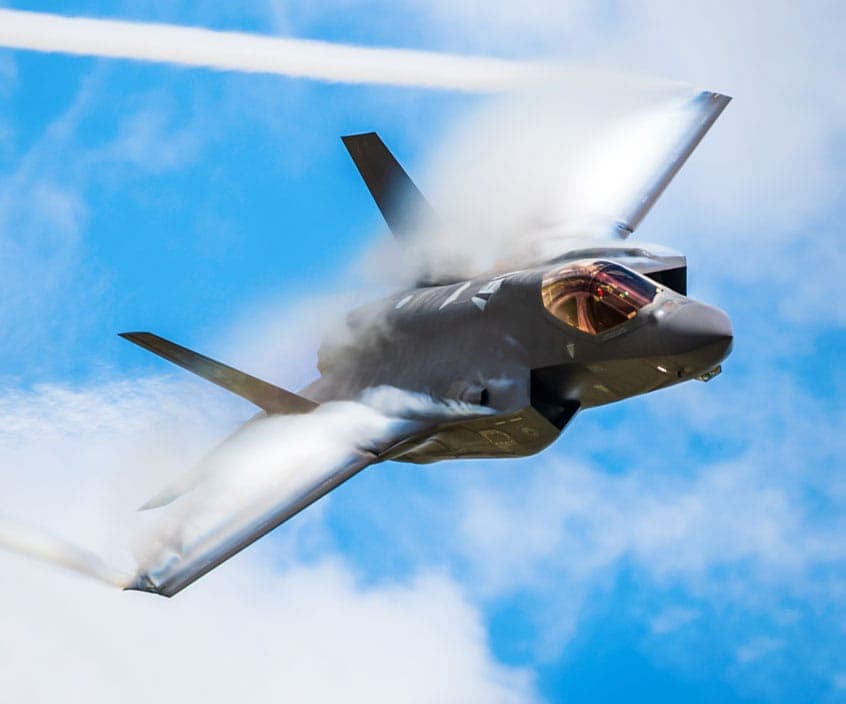
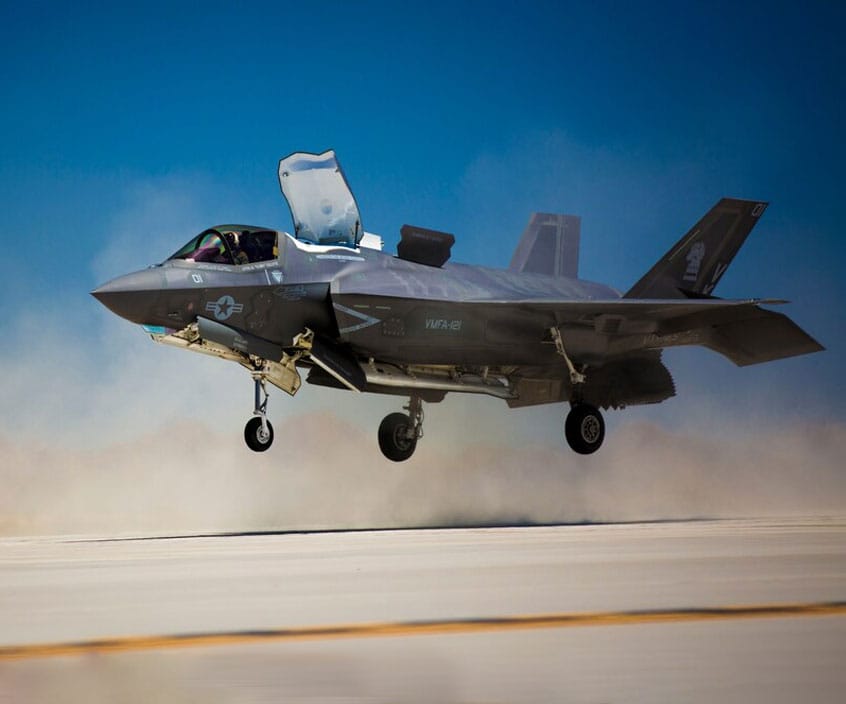
The F-35 Lightning II earned the unofficial nickname "Fat Amy" from critics and some military aviation enthusiasts who point to its larger, rounder fuselage compared to sleeker fourth-generation fighters. This nickname reflects ongoing debates about the aircraft's design philosophy and performance trade-offs.
Origins of the Nickname
The "Fat Amy" moniker emerged from military aviation forums and pilot communities in the early 2010s as the F-35 program faced scrutiny. Unlike official nicknames such as "Lightning II", this name was never sanctioned by Lockheed Martin or the military. It reflects informal criticism rather than official designation.
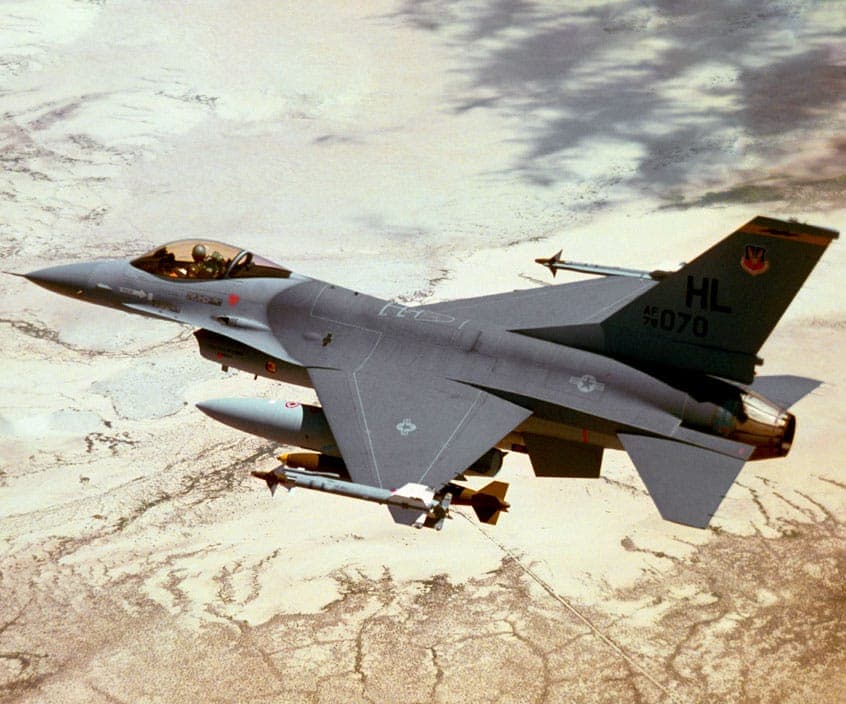
The nickname likely draws from the movie "Pitch Perfect," where a character self-identifies as "Fat Amy." In aviation circles, it became shorthand for what critics saw as the F-35's bulkier appearance compared to aircraft like the F-16 or F/A-18.
Why the F-35 Is Larger
The F-35's dimensions reflect its design requirements, not poor engineering:
- Internal weapons bays: Unlike fourth-generation fighters that carry weapons externally, the F-35 stores missiles and bombs internally to maintain stealth. This requires a larger fuselage.
- Fuel capacity: The F-35 carries significantly more internal fuel than the F-16, extending its range without external tanks that compromise stealth.
- Sensor integration: Advanced avionics, the Distributed Aperture System, and the AN/APG-81 radar require space that wasn't needed in older designs.
- F-35B variant: The STOVL (Short Take-Off and Vertical Landing) variant requires a lift fan, and all three variants share common airframe elements.
The Weight Comparison
The F-35A weighs approximately 29,300 pounds empty, compared to the F-16C's 18,900 pounds. However, this comparison misses important context. The F-35 carries its weapons internally, while the F-16 typically adds thousands of pounds in external stores that increase drag and reduce stealth.
When comparing combat-loaded weights, the difference narrows significantly. The F-35's higher base weight comes with capabilities the F-16 cannot match.
Performance Reality
Critics who use "Fat Amy" suggest the aircraft lacks agility. However, F-35 pilots report the aircraft handles well in air combat maneuvering. In exercises like Red Flag, F-35s have achieved favorable kill ratios against aggressor aircraft.
The F-22 Raptor remains superior in pure air-to-air combat, but the F-35 was designed as a multirole platform. Comparing it solely on dogfighting metrics misses its strengths in sensor fusion, electronic warfare, and strike missions.
Defending the Design
Lockheed Martin and F-35 pilots push back against the "Fat Amy" characterization. They argue:
- Stealth requirements dictate internal carriage, which requires fuselage volume
- The aircraft exceeds its performance specifications
- Pilots praise its situational awareness and sensor fusion
- Combat exercises demonstrate its effectiveness against fourth-generation threats
For a detailed comparison of fifth-generation fighters, see our analysis of the F-35 vs F-22 in a dogfight or explore the F-35's full capabilities.
The "Fat Amy" nickname persists in some circles, but the F-35's operational record increasingly speaks for itself. The aircraft continues to prove its value in exercises and deployments worldwide.